Phone:


Makcon is a diesel generator rental and power generator rental company based in Al Khobar, supplying certified generators and complete energy rental solutions to construction, industrial and shutdown projects across Saudi Arabia. As a diesel generator supplier and utility equipment rental company, we provide generators from 20 to 2,000 kVA, air compressors from 100 to 1,600 CFM, welding machines, tower lights and industrial HVAC for construction sites, plant shutdowns and remote project facilities nationwide. Every unit is Aramco and TUV certified, SASO compliant and maintained to manufacturer service intervals whether you need a single generator on short-term hire or a full multi-equipment energy rental package for a major shutdown.
We are based in Al Khobar in the Eastern Province – the industrial heartland of Saudi Arabia, where Aramco, SABIC and hundreds of EPC contractors run projects that depend on reliable temporary power and utility equipment every single day. We also supply power equipment to Riyadh, Jeddah, remote desert project sites and anywhere else in the Kingdom where your site needs power and cannot wait.
One capability sets Makcon apart from most local power equipment suppliers: industrial HVAC rental – temporary cooling and climate control for industrial tents, modular buildings and process enclosures in Saudi Arabia's extreme summer heat. Very few local rental companies offer this.
Get a Power Equipment QuoteEvery project in Saudi Arabia needs power. Whether that is a 20 kVA generator for a site office in the desert or a 1,600 kVA synchronised power plant for a major plant shutdown in Jubail, the right specification and a reliable supply chain are what determine whether your project stays on schedule or stops. Here is the full range Makcon supplies:

Temporary power is the most fundamental utility requirement on any construction or industrial project in Saudi Arabia. Grid connection takes months on new sites, remote oilfield and desert project locations have no grid at all, and plant shutdowns regularly require isolated power supplies that cannot draw from the facility grid during maintenance.
Makcon's generator fleet covers everything from compact 20 kVA units for site offices through to synchronised 2,000 kVA power sets for large industrial operations. All units run on diesel, are maintained to OEM service schedules and carry full certification for Aramco sites.
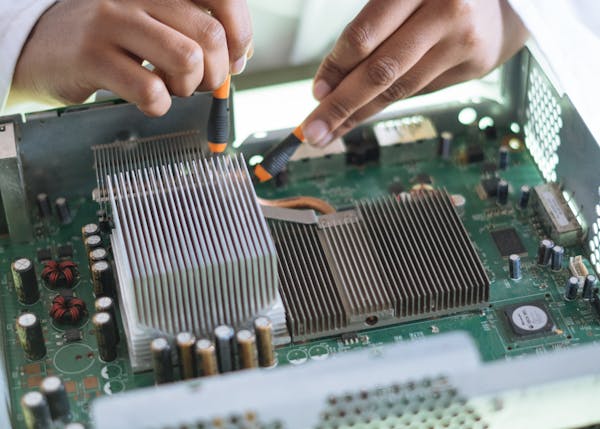
Compressed air is the energy source for pneumatic tools, sandblasting, paint spraying, pipeline testing, concrete breaking, drilling and dozens of other operations on Saudi Arabia's construction and industrial sites. Diesel-powered portable compressors are the standard choice on Saudi sites because they work anywhere – no external power required.
Sandblasting is the largest single driver of air compressor rental in the Eastern Province – surface preparation for Aramco pipelines, vessel surfaces and structural steel before coating typically requires 375 to 850 CFM depending on nozzle size and number of simultaneous operators. We will confirm the right CFM for your specific application before booking.

Engine-driven welding machines are self-contained – they generate their own power and can operate anywhere on a site without a connection to a generator or the grid. This makes them indispensable for pipeline welding, structural steel fabrication, shutdown repair work and any welding operation in a remote location or area where running cables from a generator would be impractical.
On Aramco and SABIC pipeline and vessel repair shutdowns in the Eastern Province, engine-driven welders are the standard tool for field welding operations. They are frequently requested alongside air compressors and generators as part of a combined shutdown utility package.
Construction and maintenance work in Saudi Arabia frequently runs through the night – particularly during the summer months when daytime temperatures above 45°C make outdoor work unsafe or unproductive. Night shifts are the practical solution on many Eastern Province projects, and mobile tower lights are the most cost-effective way to illuminate large work areas without permanent electrical installation.
Tower lights are also essential for Ramadan working schedules, emergency breakdown response, remote site security lighting and any plant area where fixed lighting has been isolated during a shutdown.

Saudi Arabia's summer temperatures reach 47°C in the shade in the Eastern Province. For personnel working inside industrial tents, modular site offices, temporary structures and process enclosures, this is not a comfort issue – it is a health and safety emergency waiting to happen.
Makcon provides temporary HVAC and industrial cooling solutions for these environments – a service that most local equipment rental companies in the Eastern Province do not offer at all. Our competitors can supply a generator. We can supply a generator and the cooling system running off it, engineered together for your site.
This is the question every site manager and procurement team in Saudi Arabia gets wrong at least once. Undersizing a generator causes voltage drops, tripped breakers and damaged equipment. Oversizing wastes fuel and rental budget. The right size comes from calculating your actual connected load – here is a practical guide based on what we see deployed on sites across the Eastern Province:
| Generator Size | Typical Connected Load | Saudi Arabia Site Type | Key Note |
|---|---|---|---|
| 20 – 60 kVA | Site office (lighting, computers, AC), small compound, security checkpoint | Remote camp office, security post, small compound, telecoms shelter | A 2-tonne split-unit AC draws 6–8 kVA – two units plus lighting will push a 20 kVA set hard. Size up to 40 kVA minimum for office + AC |
| 80 – 150 kVA | Small construction site: power tools, lighting, one or two AC units, concrete mixer | Residential construction, small commercial fit-out, utility contract site office | Motor starting surge (2–3x running kVA) is the main challenge at this size – avoid starting large motors simultaneously |
| 200 – 400 kVA | Mid-size construction site: welding machines, multiple AC units, water pumps, tower lights | Active EPC construction sites, industrial yard operations, medium shutdown support | This is the most common generator size on Eastern Province construction sites. If in doubt, 250 kVA covers most mid-size requirements |
| 500 – 800 kVA | Large construction site with multiple work fronts, heavy electrical loads, HVAC for large tents | Large EPC projects, industrial plant civil works, major shutdown operations | At this size, fuel consumption matters – a 500 kVA set at 75% load burns roughly 100 litres per hour. Factor fuel cost into project budgets |
| 1,000 – 1,500 kVA | Plant shutdown main power supply, large industrial camp, desalination plant support | Major plant shutdowns in Jubail, large infrastructure projects, desalination and water projects | Typically deployed as synchronised pairs for redundancy – if one set fails, the other maintains supply automatically |
| 1,600 – 2,000 kVA | Full industrial facility backup, large gas plant shutdown, major power infrastructure support | Aramco and SABIC facility support, major refinery shutdowns, giga-project power supply | At this scale, synchronised multi-set arrangements with load management systems are standard. Contact us to engineer the right solution |
Critical rule for Saudi Arabia: Always add 20–25% headroom above your calculated connected load. Saudi Arabia's summer heat causes equipment to draw more current than its nameplate rating – air conditioning compressors in particular work significantly harder at 45°C ambient than at 25°C, increasing kVA draw by 15–30% compared to temperate climate specifications. A generator sized exactly to your load at 25°C will struggle in a Saudi summer. We build this margin into every generator recommendation we make.
Newly commissioned generators, UPS systems and standby power installations cannot be certified as ready until they have been proven under real electrical load not just started and idled. A load bank rental supplies that load artificially, safely and under controlled conditions, without needing the actual site equipment connected and running.
This is a standard requirement on Aramco and SABIC commissioning projects in the Eastern Province, where generator acceptance testing, UPS battery discharge testing and standby power system certification all require a load bank on site often with a witnessed test and signed report before the power system is handed over.
AC load banks apply resistive and reactive load to test generators, switchgear and standby power systems at their actual rated kVA and power factor the correct way to prove a generator performs at full load before it goes into service, rather than discovering a fault during a real outage.
DC load banks are used for battery bank testing UPS systems, telecoms backup power and substation battery installations discharging the battery under a controlled load to measure true capacity against its rated amp-hours, which is the only reliable way to confirm a battery bank will actually perform when the grid fails.
CFM (cubic feet per minute) is the key spec for air compressors – it determines how many tools or nozzles you can run simultaneously. PSI (pressure) matters for specific applications but most Saudi Arabia construction and industrial uses fall within 90–125 PSI. Here is the CFM guide for the most common applications on Eastern Province sites:
Each pneumatic tool has its own CFM requirement. A jackhammer (breaker) uses 35–45 CFM. An impact wrench uses 4–8 CFM. A needle scaler uses 10–15 CFM. Add the CFM of all tools running simultaneously and add 25% headroom. For a crew of 5 with jackhammers and wrenches, a 185–250 CFM compressor is typically correct.
A No.6 blasting nozzle (the most common on Saudi Arabia industrial sites) requires 375–425 CFM at 100 PSI. A No.5 nozzle requires 250–300 CFM. Never run a blasting nozzle at more than 85% of the compressor's rated output – sustained 100% load in Saudi Arabia's heat significantly shortens compressor life and increases breakdown risk.
Double the single-nozzle requirement. Two No.6 nozzles need 750–850 CFM. This is common on large vessel and tank surface preparation jobs in the Eastern Province where the client needs to maximise throughput on a tight shutdown schedule. A single 850 CFM compressor or two 375 CFM units synchronised covers this.
Pneumatic pressure testing of pipelines uses lower flow rates but requires precise pressure control and clean, dry air. Most pipeline test procedures require an air dryer in addition to the compressor to prevent moisture entering the pipe. Mention pipeline testing when requesting a compressor – we include an aftercooler and dryer in the package where required.
Down-the-hole (DTH) drilling for piling, geotechnical investigation and rock anchor installation requires high-pressure air – typically 150–350 PSI rather than the standard 100–125 PSI. This requires a high-pressure compressor, not a standard construction model. Standard compressors at 100 PSI cannot drive DTH hammers – confirm your required pressure when requesting.
Industrial spray application of protective coatings on Aramco piping and structural steel typically requires 40–80 CFM at 60–90 PSI depending on the spray gun type and coating viscosity. Critically, coating applications require oil-free or low-oil air – a standard diesel compressor with a proper air treatment package (coalescing filter and water separator) is usually sufficient for most coating specifications.
Most generator and compressor datasheets are rated at 25°C ambient temperature. Eastern Province summer temperatures regularly reach 45–47°C in the shade and significantly higher inside enclosures and compounds. This is not a minor footnote – it has a direct and measurable effect on equipment performance, fuel consumption and reliability:
A diesel generator loses approximately 1% of its rated output per 5°C above its test temperature (typically 25°C or 40°C depending on the manufacturer). At 45°C ambient – a standard Saudi summer afternoon – a nominally 500 kVA set may deliver only 460–480 kVA dependably. If you size your generator exactly to your load and that load peaks on a hot afternoon, you will experience voltage drop or shutdown. We factor in a 10–15% heat derating on all generator recommendations for summer deployments in the Eastern Province.
Air compressors compress ambient air – in hot weather, that air is less dense and contains more moisture. Both factors reduce effective compressed air output. A 375 CFM compressor rated at standard conditions may deliver only 330–350 effective CFM at 45°C. Moisture in hot air also increases condensation in the compressed air system, which matters greatly for sandblasting and painting applications where water contamination ruins the finished coating. An aftercooler and water separator are strongly recommended for all compressor rentals during Saudi summer months.
Generator sets must have adequate airflow for radiator cooling. Placing a generator inside an enclosed compound, tent or container without proper ventilation dramatically accelerates engine temperature, increases fuel consumption and causes premature shutdown from over-temperature protection. When we deploy generators to enclosed or semi-enclosed locations in Saudi Arabia, we advise on minimum ventilation clearances before the unit is positioned. Getting this wrong on day one creates a pattern of daily shutdowns that are entirely preventable.
Generators running in high ambient temperatures consume more fuel per kW of output than in temperate conditions – the engine works harder to produce the same electrical output due to reduced air density. For long-duration deployments in the Eastern Province during summer, fuel cost can exceed the generator rental cost itself. Build fuel delivery into your project budget from day one, not as an afterthought. Makcon can arrange diesel fuel delivery to project sites as part of a combined utility package.
OEM service intervals for generators and compressors in tropical or desert climates are typically shorter than standard – oil degrades faster at high temperatures, air filters clog with sand and dust faster than in temperate environments, and coolant needs checking more frequently. All Makcon rental equipment is maintained on a heat-adjusted service schedule rather than the standard Northern European calendar that most manufacturer documentation is written for.
Silent generator sets – canopied for noise reduction – restrict airflow to the radiator more than open-set generators. In a Saudi summer, this restriction compounds the ambient heat problem. We ensure all canopied generators deployed in summer include temperature alarm monitoring and that enclosure ventilation meets the manufacturer's minimum requirements for the specific ambient temperature range. Sites located in confined areas need to be evaluated case by case.
Saudi Arabia's construction and industrial sector runs year-round, including through summers when outdoor shade temperatures routinely exceed 45°C. Inside unventilated tents, modular cabins, portable site offices and process enclosures, that temperature rises further. Workers cannot function safely – or legally under Saudi Ministry of Human Resources heat protection regulations – without adequate cooling.
The problem: permanent air conditioning takes weeks to procure and install. Plants undergoing shutdown have existing HVAC isolated. New construction sites have no services at all. Temporary industrial HVAC is the solution – and Makcon is one of the few local rental companies in the Eastern Province that supplies it.
We supply cooling units matched to the specific space, heat load and power availability. A 20-tonne packaged cooling unit running from a Makcon generator can maintain a large industrial tent at a safe working temperature even at peak Saudi summer conditions.

There are multiple generator rental companies operating in Saudi Arabia. Here is what clients who have used others consistently say drives them to Makcon – and what keeps them returning:
The most common mistake in generator rental is ordering the wrong size. We ask about your connected load, factor in Saudi summer heat derating, add appropriate headroom for motor starting surges and recommend the right kVA – not just the nearest available unit. Getting this right at the enquiry stage costs nothing. Getting it wrong costs the project days of disruption and emergency re-hire.
Aramco generator deployments require specific documentation: TUV third-party inspection certificate, Aramco equipment approval, SASO compliance, electrical testing record and insurance certificate. Every one of these is prepared and verified before the generator leaves Al Khobar. We have never had a generator refused at an Aramco or SABIC gate for incomplete paperwork.
When a generator trips at 2am during a plant shutdown in Jubail, the entire shutdown schedule stops until power is restored. Our on-call technician reaches Eastern Province sites within two to four hours of a breakdown call. For critical applications, we recommend deploying a standby unit alongside the primary generator – we will discuss this option for any shutdown or critical power application.
If your site needs a 250 kVA generator and cooling for the command tent during a summer shutdown, Makcon sizes and supplies both – and designs the electrical interface between them. No separate HVAC supplier to coordinate, no argument about whose generator output is causing the AC compressor to trip. One package, one invoice, one point of accountability.
Temporary power and utilities are needed across every sector in the Kingdom. Here is how each industry's requirements differ in practice:
Plant shutdowns require isolated temporary power for work lighting, ventilation, sandblasting, welding and control room operations. Generators, compressors and welders are deployed simultaneously across multiple work fronts, all requiring Aramco certification and coordinated mobilisation within a tight pre-shutdown window.
New construction sites without grid connection need generators from day one. As the project grows and load increases, generator capacity scales up. EPC projects in the Eastern Province regularly graduate from a 100 kVA site office unit to a 500 kVA multi-load set as construction activity intensifies across multiple trades.
Pipeline projects across the Eastern Province and wider Kingdom use generators for camp power, welding machines for field joints, compressors for hydrotesting and sandblasting, and tower lights for night-time pipeline laying operations. All five utility types are often required simultaneously on a single active pipeline spread.
Remote oilfield camps, desert exploration sites and offshore support bases have no grid – generator power is the only option. These sites also have no supply chain for fuel or maintenance parts, making reliable equipment and a supplier with strong field support critical. Makcon supplies fuel delivery and maintenance scheduling as part of long-term remote site generator packages.
Saudi Arabia's growing events sector – from corporate conferences to sporting events to Vision 2030 public installations – requires clean, reliable temporary power and climate control for large tent structures. Both generators and HVAC units are needed, and noise levels at event sites typically require canopied (silent) generator sets rather than open-frame industrial units.
Commissioning and maintenance of water treatment plants, desalination facilities and power sub-stations requires temporary generators for pre-commissioning testing, protective relay testing and sections of the plant that are energised before the permanent grid connection is complete. These are technical applications requiring correctly specified generators – not just the nearest available unit.
Fleet based in Al Khobar, deployed across the Kingdom. Primary service areas:

Dammam's port, industrial zones and construction sector create consistent demand for generators and compressors. Most Dammam sites receive delivery within hours from our Al Khobar yard. Dammam service →

Jubail Industrial City's shutdown events create the highest simultaneous demand for generators, compressors and welders of any location in the Eastern Province. All units deployed here carry Aramco and SABIC documentation – prepared in advance. Jubail service →

Our base. Same-day generator and compressor delivery available for most Al Khobar sites. Shortest transport distance in the Eastern Province keeps delivery cost lower than competitors based elsewhere. Al Khobar service →
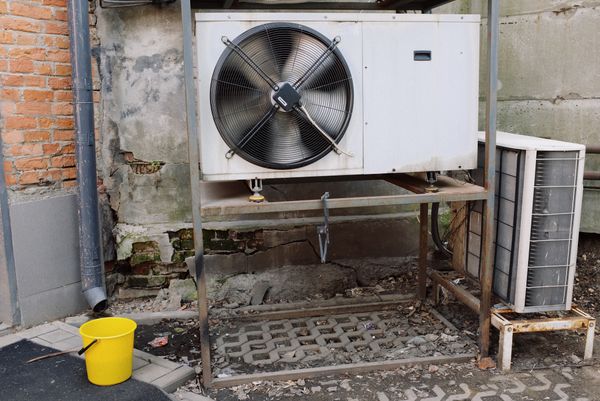
Dhahran is Aramco's headquarters – generator certification requirements here are among the strictest in the Kingdom. Our documentation arrives with the unit, not after the gate pass is rejected. Dhahran service →

Riyadh's construction programme and Vision 2030 giga-projects create strong generator and HVAC demand. We also supply remote oilfield sites, desert project camps and any location in the Kingdom that needs power where there is none.
Jeddah, Yanbu, Tabuk, NEOM, Ras Al Khair, remote camps, desert exploration sites – we deploy power and utility equipment across the full Kingdom. We can also arrange fuel supply for remote sites. Tell us your location.
Get a QuoteGenerator and utility equipment pricing depends on kVA/CFM rating, duration and whether a technician is included. Here is how our structure works:
For emergency power cover, short maintenance windows and event power where a weekly rate is not justified. Generator daily rates include delivery, connection and standard fuel for the first working day – confirm terms when booking.
One to four weeks – the most common hire period for plant shutdowns, short construction phases and event installations. Fuel consumption is the main variable cost at this duration – we can include weekly fuel delivery in the package for remote sites.
Standard for active construction sites, ongoing industrial operations and long-duration project deployments. Monthly generator rates are substantially lower per day than weekly – most Eastern Province construction sites run on monthly cycles.
Six months to multi-year contracts for remote site camps, major infrastructure projects and facility support operations. Includes dedicated maintenance schedule, fixed pricing and a dedicated account manager. Fuel delivery contracts available.
Generator rental rates in Saudi Arabia vary by kVA rating. As a general reference, Golden Rentals publicly quotes SAR 4,000 to SAR 30,000+ per month for generators across their fleet – the Makcon range is competitive with this for equivalent specifications. Exact pricing depends on generator size, site location, rental duration and whether a technician is included. We respond to all quote requests the same day.
Three different certification frameworks apply to temporary power equipment operating in Saudi Arabia, and they cover different things. Understanding what each one means helps procurement teams prepare the correct documentation for their site:
TUV / Third-Party Inspection (Aramco requirement) – A physical inspection of the generator or compressor by an Aramco-approved inspection body. The inspector verifies the equipment's mechanical condition, safety systems, electrical testing, fire suppression (where fitted) and maintenance status. This certificate has a defined expiry date – typically 12 months – and must be renewed before deployment if expired.
Saudi Aramco Equipment Approval – A separate Aramco vendor registration requirement confirming the specific equipment unit is approved for use within Aramco facilities. This is linked to the TUV certificate but is a distinct document.
SASO Compliance – The Saudi Standards, Metrology and Quality Organization sets baseline product standards for electrical equipment sold or rented in the Kingdom. All generators and compressors in Makcon's fleet are sourced from manufacturers whose products meet SASO requirements.
Direct answers to the questions construction managers, HSE officers and procurement teams ask us before booking power equipment in Saudi Arabia.
Start by listing every electrical load on your site – lighting, tools, air conditioning, pumps, welding machines – and add up the kW. Add 25% headroom for motor starting surges and a further 10–15% for summer heat derating (generators lose output at high ambient temperatures). As a practical guide: a small site office with AC needs 40–60 kVA; a medium construction site with multiple trades and AC needs 200–350 kVA; a large site with welding, pumps and full camp AC needs 500–800 kVA. When you enquire, tell us your connected loads and we size it correctly – do not just pick a number and hope it works on the first hot afternoon.
A single No.6 blasting nozzle – the most common on Saudi Arabia industrial and pipeline sites – requires 375 to 425 CFM at 100 PSI. A No.5 nozzle needs 250 to 300 CFM. Never run a compressor at 100% of rated output continuously in Saudi Arabia's summer heat – size up to 450–500 CFM for a single No.6 nozzle to maintain a sustainable duty cycle. For two simultaneous nozzles, you need 750–850 CFM. Mention the nozzle size, number of operators and whether you need an aftercooler and dryer when requesting a quote.
Yes. Any generator operating inside an Aramco facility requires a current TUV third-party inspection certificate issued by an Aramco-approved inspection body, Saudi Aramco equipment approval documentation, and an electrical testing record. Generators older than the certificate's expiry date – typically 12 months – are refused entry regardless of mechanical condition. Beyond the machine documentation, the technician connecting and operating the generator on an Aramco site must hold a valid electrical permit and comply with Aramco's hot work and energised equipment procedures. Makcon prepares all generator documentation before departure – not at the gate.
Yes. Makcon supplies canopied (silent) generator sets that typically reduce noise output to 65–72 dB(A) at 7 metres – compared to 85–95 dB(A) for open frame industrial sets. For residential areas, hospitals and event venues in Dammam, Al Khobar and Riyadh where noise regulations apply, silent sets are the correct specification. Two important points: silent sets restrict airflow to the engine radiator, which is a concern in Saudi Arabia's summer heat – we ensure ventilation clearances are met before deployment. Also, silent sets are physically larger than open sets of equivalent kVA – check that the access route and final position can accommodate the footprint.
Yes – and it is one of the services that distinguishes Makcon from most local equipment rental companies in the Eastern Province. We supply spot coolers for individual rooms and cabins, packaged AC units for large tents and modular buildings, and industrial chillers for process cooling applications. This is particularly relevant for plant shutdown operations where temporary control rooms, safety stations and rest areas need climate control in summer, and for construction sites where modular offices and mess facilities need cooling from the moment they are installed. We can pair HVAC rental with a generator rental – sized together so the cooling load is properly accounted for in the generator specification.
A standby generator is designed to run for short periods during power outages – typically a few hours per year at most. Running a standby-rated generator as a primary power source on a construction site in Saudi Arabia shortens its service life significantly and voids most manufacturer warranties. A prime power generator is rated for continuous operation at full load with no time limit – this is what you need for a construction site or any location where the generator is the only power source. All Makcon rental generators are prime-rated unless otherwise specified. If a rental company does not distinguish between prime and standby ratings when quoting you, ask – it matters more than the kVA number.
Yes. For remote project sites, oilfield camp operations and any location where fuel supply is not readily available on-site, we coordinate diesel fuel delivery as part of a combined generator package. Fuel consumption planning is important on remote sites – a 500 kVA generator at 75% load burns approximately 100 litres per hour, meaning a single week of continuous operation requires around 16,800 litres of fuel. We factor this into site planning for long-duration remote deployments and can schedule regular fuel deliveries to prevent unplanned shutdowns caused by running out of fuel – which is more common on remote Saudi Arabia sites than most project managers expect.
For standard generators in the 50 to 500 kVA range from our Al Khobar yard, same-day mobilisation is available in most cases if you contact us before noon. For generators that need to enter Aramco or SABIC facilities, 24 to 48 hours is more realistic because gate pass documentation takes time to process regardless of how quickly we prepare the machine. For generators above 1,000 kVA, allow 48 to 72 hours for transport and installation preparation. For emergency power situations, call us directly – we will tell you frankly what is possible and will do everything we can to meet a genuine emergency timeline.
Tell us your power requirement, site location and whether the site has Aramco or SABIC access requirements. We size the generator correctly for your load and summer conditions, check availability and send a quote the same day.
Call +966 56 849 1941 or email sales@mak-con.com. We serve the full Kingdom – Dammam, Jubail, Al Khobar, Dhahran, Riyadh, Jeddah and remote sites nationwide.
Get a Power Equipment QuoteYour email address will not be published. Required fields are marked *
Get In Touch