Manlift Safety Requirements for Working at Height in Saudi Arabia
Essential manlift safety standards for Saudi Arabia: Aramco MEWP requirements, operator certification, pre-use inspections and fall protection guidelines.
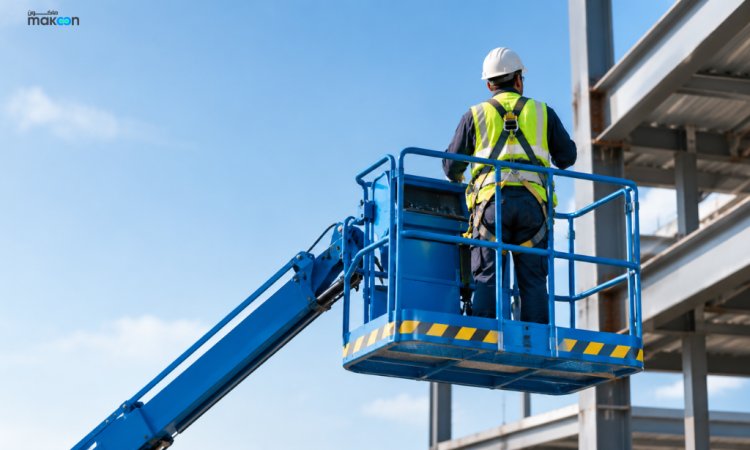
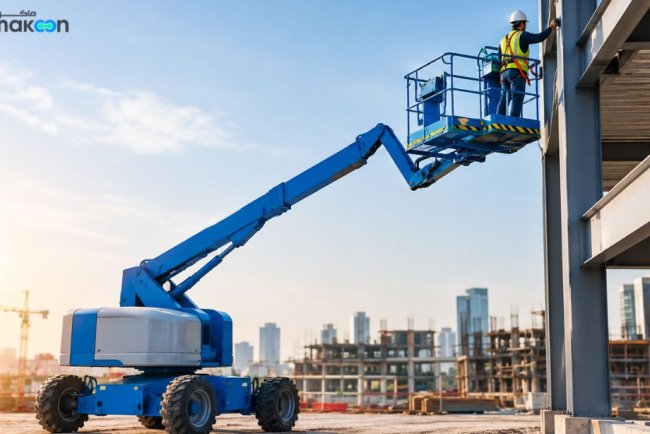
Saudi Arabia's construction and industrial sectors operate under strict regulations for working at height. Every manlift whether a scissor lift, boom lift or spider lift must meet specific safety standards before it enters a work site. This guide covers the requirements you must satisfy, from national regulations to Aramco-specific rules.
Saudi Arabia Regulations for Working at Height
The Saudi Building Code (SBC) and the Ministry of Human Resources and Social Development (MHRSD) set the baseline safety standards for working at height in the Kingdom:
- All work above 1.8 metres must use approved fall protection guardrails, safety nets or personal fall arrest systems.
- Mobile Elevating Work Platforms (MEWPs/manlifts) must be operated only by trained and certified personnel.
- Equipment must carry a valid third-party inspection certificate from an accredited body.
- Employers must conduct a site-specific risk assessment before starting any work at height.
These standards align with international frameworks (OSHA, EN 280, ISO 18893) and are enforced through MHRSD site inspections and project-level health and safety audits.
Aramco and SABIC MEWP Safety Standards
Aramco and SABIC facilities apply standards that go beyond the national baseline. If your project is on an Aramco, SABIC or Royal Commission site, your manlifts and operators must comply with these requirements:
Equipment Standards
- TUV third-party inspection: annual inspection by a TUV-accredited body. Certificate must be valid and on-site documentation available for auditors at all times.
- Annual load test: proof load test at 125% of rated capacity, performed by an accredited testing company. Certificate validity: 12 months.
- Manufacturer maintenance schedule: documented evidence that the machine has been serviced per the OEM maintenance intervals.
- Safety device function test: tilt alarm, overload cut-out, emergency lowering, horn and beacon must all function before entering the site.
- Fire extinguisher: a charged, in-date dry chemical extinguisher mounted on the machine.
Operator Standards
- Aramco MEWP Work Permit: the operator must hold this specific category of Aramco Work Permit. A general equipment operator permit or crane licence does not substitute.
- MEWP theory and practical training certificate: from a recognised training provider, renewed every 2–3 years depending on the provider.
- Medical fitness certificate: valid within 12 months, confirming fitness for working at height (no vertigo, adequate vision, cardiovascular fitness).
- Rigger certification: Rigger Level 1, 2 or 3 (Aramco-certified) if any lifting activity accompanies manlift work.
Pre-Use Inspection Checklist
Before every shift, the operator must complete a pre-use inspection. This is not optional skipping it can result in immediate site expulsion and contractor penalties. The checklist covers:
- Visual walk-around: check for hydraulic leaks, tyre condition, structural damage, loose bolts and cracked welds.
- Controls function: test all platform and ground controls, emergency stop and emergency lowering. Both sets of controls must work.
- Safety devices: tilt alarm, overload cut-out, descent alarm and backup alarm must all activate correctly.
- Fall protection anchor points: verify the platform anchor points are intact and rated for the required load (typically 15 kN per person).
- Fluid levels: engine oil, hydraulic oil, coolant and fuel (diesel units). Battery charge level (electric units).
- Documentation check: confirm TUV certificate, load test certificate and insurance documents are on board.
The completed checklist must be signed by the operator and countersigned by the site supervisor. MAKCON supplies pre-printed inspection checklists with every rental unit. View our manlift rental fleet.
Personal Protective Equipment for Manlift Operations
Workers on any manlift platform in Saudi Arabia must wear:
- Full-body harness: EN 361 or equivalent standard, inspected before each use.
- Twin-tail lanyard with energy absorber: EN 355 rated, connected to the platform's designated anchor point. Never anchor to the guardrail.
- Hard hat with chin strap: EN 397, retained by chin strap to prevent it falling on workers below.
- Safety boots: steel-toe, ankle-height minimum.
- High-visibility vest: Class 2 or higher.
- Gloves and eye protection: task-specific (welding, grinding, chemical exposure).
Common Safety Violations to Avoid
These are the violations most frequently cited by Aramco and SABIC safety auditors:
- Operating on uneven ground without outriggers: if the machine has outriggers, deploy them fully before raising the platform.
- Overloading the platform: the rated capacity is for workers, tools AND materials combined. Exceeding it triggers the overload cut-out and is a recordable safety violation.
- Not wearing a harness: "I am only going up for a minute" is not a valid reason. Harness on before the platform moves.
- Working in wind above the limit: most boom lifts have a maximum operating wind speed of 12.5 m/s (45 km/h). Monitor wind conditions continuously at height.
- Using the manlift as a crane: do not suspend or lift loads from the boom or basket. Manlifts are designed for personnel, not material hoisting.
- Driving with the platform raised: scissor lifts may travel at reduced height (manufacturer-specific). Boom lifts must be fully lowered and stowed before driving.
Frequently Asked Questions About Manlift Safety
What certification do I need to operate a manlift in Saudi Arabia
At minimum, you need MEWP operator training from a recognised provider (such as IPAF or an accredited Saudi training centre) and a valid operator card. On Aramco and SABIC sites, you additionally need an Aramco Work Permit specifically for the MEWP category. Your employer must also verify medical fitness for working at height.
How often must a manlift be inspected
Third-party inspection (TUV or equivalent): annually. Load test: annually. Manufacturer service: per OEM schedule (typically every 250–500 operating hours). Daily pre-use inspection: before every shift by the operator. These intervals are non-negotiable on Aramco sites, expired certificates mean the machine is immediately removed from service.
Can I use a manlift in rain or high wind
Light rain is generally acceptable if the platform has a non-slip surface and the operator uses appropriate PPE. High wind is a strict stop-work trigger: most boom lifts must cease operations above 12.5 m/s (45 km/h). Scissor lifts are more wind-sensitive due to their large platform, manufacturers typically set a lower limit of 8–10 m/s. During Saudi Arabia's occasional shamal dust storms, all manlift work must stop.
What happens if a safety violation is recorded on an Aramco site
Consequences escalate rapidly: first violation typically results in a safety stand-down and incident report. Repeat violations can lead to contractor suspension, removal of site access for the individual operator, and potential debarment from future Aramco contracts. A single serious violation (fatality, major injury) triggers an immediate investigation and possible project-wide work stoppage.
Does MAKCON provide safety training for manlift operators
MAKCON supplies operators who already hold valid MEWP certifications and Aramco Work Permits. For contractors who need to train their own crew, we can recommend accredited training providers in the Eastern Province. We also provide a site-specific orientation and machine familiarisation session with every rental delivery. Read our complete manlift rental guide.
What's Your Reaction?