Cut Construction Costs with Equipment Rental
See 10 proven ways equipment rental cuts construction costs in Saudi Arabia – with a real SAR cost comparison and what to look for in a rental partner.
Saudi Arabia's National Development Fund reported that the Kingdom's construction sector accounted for over SAR 400 billion in project value under active execution in 2024 driven by Vision 2030 giga-projects, infrastructure expansion, and industrial development across every region. Yet project managers and contractors across the Kingdom consistently identify equipment procurement and ownership as one of the largest and most controllable cost variables in their budgets.
Heavy equipment rental in Saudi Arabia is no longer simply a fallback for contractors who cannot afford to buy. It has become the strategically preferred approach for construction companies that want to maintain financial agility, avoid the overhead of ownership, and deploy the right machine for each project phase without carrying idle assets between contracts.
This guide covers the ten specific mechanisms through which equipment rental reduces construction project costs, which equipment categories generate the highest savings, a real rental-versus-ownership cost comparison, and what to look for in a heavy equipment rental partner in Saudi Arabia.
Understanding the Major Cost Challenges in Construction Projects
Before addressing how rental reduces costs, it is worth documenting what construction companies are actually managing. A 2023 survey of Saudi construction contractors by the Saudi Contractors Authority identified the following as the top five controllable cost drivers on projects in the Kingdom:
|
Cost Driver |
% of Projects Reporting as Top-3 Challenge |
Primary Cause |
|
Equipment procurement and ownership costs |
67% |
High capital outlay, depreciation, maintenance overhead |
|
Labour and operator costs |
61% |
Skilled operator shortage, visa and mobilisation costs |
|
Material price volatility |
58% |
Import costs, supply chain disruption, currency exposure |
|
Project timeline overruns |
54% |
Equipment downtime, late delivery, scope change |
|
Fuel and logistics costs |
49% |
Fuel price fluctuation, transport of heavy assets between sites |
Equipment procurement appears in three of the five drivers directly as a procurement cost, as a downtime risk (equipment failure extends timelines), and as a logistics cost (owned equipment must be transported between project sites). Equipment rental addresses all three simultaneously.
What Are Equipment Rental Services?

Equipment rental services provide construction companies, industrial operators, and project developers with access to heavy machinery, lifting equipment, earthmoving plant, and power generation units on a time-limited contract basis without ownership transfer. The contractor pays a rental rate (daily, weekly, monthly, or project-term) for the use of the equipment, and the rental company retains ownership, maintenance responsibility, and asset risk.
Two hire types cover most Saudi Arabia project requirements: wet hire, which provides the machine plus a certified, licenced operator; and dry hire, which provides the machine only, with the contractor supplying their own operator. The best equipment rental companies provide both, with a maintenance SLA on dry hire contracts to ensure the equipment remains operational for the contract duration.
10 Ways Equipment Rental Services Reduce Construction Project Costs
1. Eliminate Large Upfront Capital Investment
Purchasing a Caterpillar D9 bulldozer in Saudi Arabia requires SAR 1.5 million upfront. A 50-tonne mobile crane costs SAR 2–4 million. A fleet of five excavators represents SAR 3–5 million in capital outlay before a single cubic metre of earth is moved. For contractors bidding on multiple projects simultaneously, this capital is better deployed in project execution than equipment ownership.
Equipment rental converts capital expenditure (CapEx) into operational expenditure (OpEx). This shift frees working capital for materials, labour, bonding, and project overheads improving the financial health of the business and its capacity to win and execute more contracts concurrently.
2. Reduce Maintenance and Repair Costs
Heavy equipment maintenance costs in Saudi Arabia's climate are significant. Dust, heat, and continuous operation accelerate wear on filters, hydraulic seals, tracks, and undercarriage components. Industry averages suggest annual maintenance and repair costs of 15–20% of equipment purchase value meaning a SAR 2 million crane costs SAR 300,000–400,000 per year to maintain at operating standard.
Equipment rental transfers this cost to the rental company. Under wet hire agreements, all maintenance is the rental company's responsibility. Under dry hire with a maintenance SLA, scheduled servicing is managed and paid by the rental company. The contractor bears no maintenance risk beyond the rental rate.
3. Avoid Equipment Depreciation
Heavy construction equipment depreciates at 15–25% per year in the first five years faster in harsh operating environments. A SAR 3 million excavator purchased today is worth SAR 900,000–1.2 million after five years of moderate use. This depreciation is a real financial loss that owned equipment inflicts on the contractor's balance sheet regardless of how productively the machine was used.
Rental eliminates depreciation as a business cost. The rental company bears the asset loss; the contractor pays only for productive use time. Over a five-year project portfolio, this difference can represent tens of millions of riyals in financial advantage for high-volume equipment users.
4. Access Modern and Fuel-Efficient Equipment
Fuel is consistently cited as one of the largest variable costs on Saudi construction sites. Modern excavators, wheel loaders, and cranes operate at 20–35% lower fuel consumption than 10-year-old equivalents at the same work output a direct productivity and cost advantage.
Equipment rental companies maintain current-generation fleets because modern equipment represents their competitive advantage and their asset value. Contractors who rent access fuel-efficient, technologically current machines without paying the replacement cost. Owned equipment fleets age rental fleets don't.
5. Pay Only for What You Use
An owned crane sitting idle between projects still costs money: insurance, storage, annual inspection, battery maintenance, and the opportunity cost of the capital tied up in it. A rental crane costs nothing when it is not needed the contract ends and the asset goes back to the rental company.
For Saudi contractors managing multiple project types across the Kingdom each requiring different equipment configurations the ability to pay only for active use time is a structural cost advantage that compounds across every project in the portfolio.
6. Minimize Downtime Risks
Equipment downtime on a Saudi construction or industrial project is expensive. A crane or excavator out of service can stop an entire crew typically 8–20 workers waiting for the machine to return. At SAR 300–600 per worker per day, a two-day equipment breakdown costs SAR 5,000–12,000 in idle labour alone, plus the programme delay.
Reputable rental companies the best equipment rental companies in Saudi Arabia maintain reserve units and rapid-response maintenance teams. Makcon, for example, provides a point of contact throughout the rental period for technical queries and equipment issues, and can arrange replacement units for Eastern Province sites within 24 hours. This response capability is rarely achievable with owned equipment managed by the contractor's in-house maintenance team.
7. Lower Storage and Yard Costs
Owned equipment requires a secure yard or marshalling area. In Saudi Arabia's industrial zones Al Khobar, Jubail Industrial City, Yanbu Industrial City yard space costs SAR 200–800 per square metre annually depending on location and specification. A fleet of 10 pieces of major plant requires a minimum 2,000–3,000 m² of secure yard, plus fencing, lighting, and access control.
Rental equipment lives at the rental company's yard between contracts. The contractor pays for neither storage space nor the yard infrastructure required to secure it.
8. Reduce Transportation and Logistics Burden
Moving heavy equipment between project sites in Saudi Arabia requires low-loaders, route surveys, traffic management permits, and for oversize loads police escorts. A single low-loader movement from Al Khobar to Riyadh costs SAR 4,000–8,000 depending on load size. Contractors with owned fleets bear this cost every time a project ends and equipment must move.
Rental companies manage their own transport logistics. Makcon arranges low-loader delivery to site and collection at contract end these costs are transparent in the written quotation and are typically lower per movement than contractor-managed transport due to route familiarity and established carrier relationships.
9. Scale Equipment Needs Up or Down Easily
Construction project phases have different equipment requirements. Earthmoving dominates early phases; cranes are critical during structure erection; forklifts and access platforms are needed during fit-out. An owned fleet sized for peak requirement sits partially idle during every other phase.
Rental allows contractors to right-size their equipment fleet to actual current need adding machines as project scope increases, returning them as phases complete. This flexibility is particularly valuable on Saudi Arabia's Vision 2030 projects, where scope changes and phased delivery are the rule rather than the exception.
10. Improve Cash Flow and Financial Planning
Predictable, fixed rental rates produce predictable project cost models. A contractor renting an excavator at SAR 1,800/day knows exactly what their equipment cost will be for the next 30 days. A contractor who owns the same machine faces variable maintenance costs, potential repair bills, and the invisible cost of depreciation none of which appear as line items until they have already occurred.
Rental costs are budgeted, invoiced, and paid on a predictable schedule. This improves cash flow visibility, simplifies project cost reporting, and reduces the financial surprises that cause contractors to exceed project budgets on the equipment line.
Equipment Categories That Deliver the Highest Cost Savings Through Rental
Not all equipment categories produce equal savings through rental. The following categories consistently show the highest financial advantage for Saudi Arabia contractors who rent rather than own.
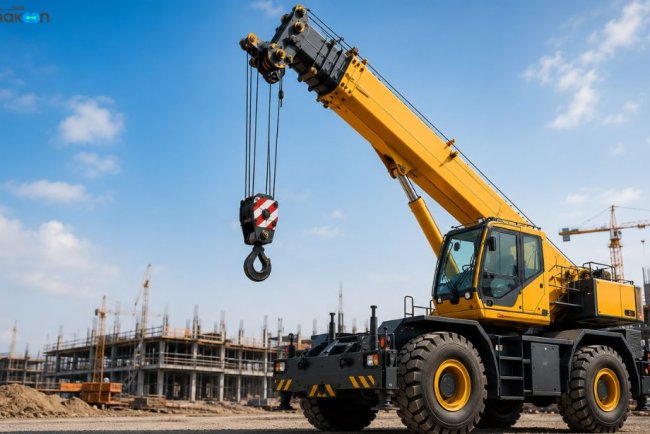
Crane Rental Services
Cranes represent the highest per-unit capital cost in most construction fleets SAR 2–8 million for mobile crane classes commonly used on Saudi projects. Annual ownership costs (maintenance, inspection, insurance, storage) add SAR 400,000–1.2 million per unit. For contractors who need crane capacity on multiple projects but cannot justify year-round utilisation, rental delivers dramatic per-project cost reduction.
Excavator Rental Services
Excavators are the most widely requested category in heavy equipment rental in Saudi Arabia. The rental market for excavators is well-developed, prices are competitive, and the range of available classes from 5-tonne mini excavators for utility work to 50-tonne large excavators for bulk earthmoving means contractors can closely match the machine to the task without over-specifying.
Forklift Rental Services
Forklifts are needed on almost every construction project for unloading materials, moving palletised goods, and handling pipe and steel stock. The need is typically sporadic rather than continuous, making full-time ownership inefficient for most contractors. Short-term and weekly forklift rental is cost-effective for the material handling peaks that occur at project delivery and fit-out phases.
Access Equipment Rental
Man-lift platforms, scissor lifts, and boom lifts are required for installation, inspection, and maintenance tasks at height. These are classic rental items needed intensively for specific project phases, then unnecessary until the next height-access requirement. Ownership cost cannot be justified against the intermittent use pattern.
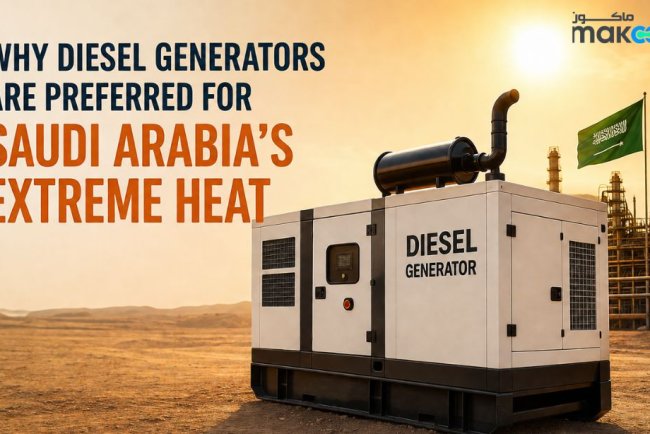
Diesel Generator Rental
Temporary power is required at most Saudi construction sites before permanent grid connection. Generator rental from 20 kVA to 2,000 kVA is almost universally done on a rental basis because the requirement ends when the project reaches energisation. Owning generators for temporary power is a classic over-investment that rental eliminates.
Earthmoving Equipment Rental
Bulldozers, graders, compactors, and wheel loaders are the production engines of earthmoving projects. Their utilisation is heavily phase-dependent essential during site preparation and subgrade work, largely redundant during structural and fit-out phases. Renting earthmoving equipment for the earthworks phase and returning it when the work is complete avoids the idle ownership cost that plagues contractors who maintain permanent earthmoving fleets.
Real-World Example: Rental vs Ownership Cost Comparison
The following comparison models the total cost of a 50-tonne mobile crane over a 12-month project for a contractor in Al Khobar, Eastern Province. The project requires the crane for approximately 200 days of active use over the year, with periods of inactivity during design, procurement, and commissioning phases.
|
Cost Element |
Ownership |
Rental from Makcon |
|
Equipment purchase / deposit |
SAR 3,200,000 (purchase) |
SAR 0 |
|
Annual maintenance and inspection |
SAR 480,000 (est. 15% of purchase) |
Included in wet hire rate |
|
Insurance |
SAR 64,000 (2% of value) |
Included – Makcon's liability |
|
Operator salary (12 months) |
SAR 96,000 (SAR 8,000/month) |
Included in wet hire |
|
Storage yard (2,000 m³, 12 months) |
SAR 240,000 |
SAR 0 – Makcon's yard |
|
Transport (2 site moves) |
SAR 14,000 |
Included in rental agreement |
|
Equipment rental cost (200 days) |
N/A – owned |
SAR 480,000 (SAR 2,400/day est.) |
|
Depreciation (20% of SAR 3.2M) |
SAR 640,000 |
SAR 0 – Makcon's asset |
|
Total 12-month cost |
SAR 4,734,000 |
SAR 480,000 |
|
Cost per active crane day |
SAR 23,670 |
SAR 2,400 |
How Equipment Rental Helps Meet Project Deadlines
Budget overruns and deadline failures are closely linked in Saudi construction. Every day a project runs past its planned completion date costs money in extended site staff, extended plant hire costs, and contractual delay penalties. Equipment rental contributes to deadline compliance in three specific ways:
• Fast deployment: Makcon can deploy equipment to Eastern Province sites within 24 hours of contract confirmation eliminating the weeks-long procurement, import, and pre-delivery preparation cycle that owned equipment acquisition requires
• Equipment replacement on failure: When rented equipment breaks down, the rental company bears responsibility for repair or replacement. Contractors with owned equipment bear the repair time cost alone, with no guaranteed response timeline
• Surge capacity: When a project phase falls behind schedule, contractors can rent additional equipment to increase production and recover the programme – something impossible with a fixed owned fleet without a capital purchase decision
Why Equipment Rental Is Becoming the Preferred Choice in Saudi Arabia
Saudi Arabia's construction market has specific characteristics that make rental financially superior to ownership for the majority of contractors:
|
Saudi Arabia Market Factor |
How Rental Addresses It |
|
Project-driven demand peaks |
Rental matches fleet size to active projects – no idle owned equipment between awards |
|
Vision 2030 giga-project timelines |
Fast rental deployment matches aggressive project start-up timelines at NEOM, Red Sea Project, and other giga-projects that procurement cannot meet |
|
Extreme climate operating conditions |
Rental companies maintain modern, heat-rated equipment – older owned fleets fail more often |
|
Multi-region project portfolios |
Single rental vendor (Makcon) deploys across all KSA regions – simplifying logistics for contractors |
|
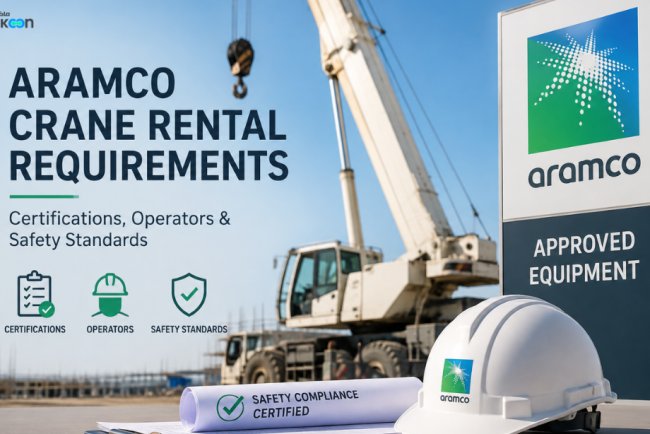
ARAMCO and SABIC compliance requirements |
Best equipment rental companies supply Iqama-compliant, inspection-certified units meeting major client requirements |
|
Limited equipment storage in industrial zones |
Rental eliminates the yard space requirement in expensive industrial area locations |
Choosing the Right Equipment Rental Partner
The cost savings from equipment rental are only realised if the rental partner delivers. A rental company that provides poorly maintained equipment, unreliable operators, or slow response to breakdowns can cost a contractor more in delay and productivity loss than the rental savings generate. The selection criteria that matter:
• Fleet condition and maintenance standards: Pre-delivery inspection certificates and documented maintenance schedules are the baseline not optional extras
• Operator certification: All wet hire operators must hold valid Saudi licences for the equipment category verify this before signing
• Response time commitment: What is the rental company's documented response time for equipment breakdown? What is the replacement unit availability for your project region?
• Regulatory compliance: Saudi-registered company, Iqama-compliant workforce, documented compliance for ARAMCO, SABIC, and government project requirements
• Coverage area: Can the rental company serve all your project locations in Saudi Arabia under a single vendor agreement, or will you manage multiple suppliers for different regions?
• Contract flexibility: Daily, weekly, monthly, and project-term contracts without forced minimums that don't match your project phases
How Makcon Helps Contractors Reduce Construction Costs
Makcon (Mithaq Services General Contracting) is a Saudi-registered heavy equipment rental company based in Al Khobar, Eastern Province, serving construction, oil and gas, and industrial projects across the Kingdom. Our fleet covers cranes, excavators, bulldozers, wheel loaders, forklifts, compactors, graders, and generators available on daily, monthly, and project-term contracts with wet and dry hire options.
|
How Makcon Delivers Cost Reduction |
Specific Benefit |
|
Same-week deployment across KSA |
No project delay waiting for equipment cost savings from faster project start |
|
Pre-delivery inspection certificate |
No hidden repair costs on arrival equipment is cleared before reaching your site |
|
Certified wet hire operators |
No operator sourcing, licencing, or visa cost included in wet hire rate |
|
Maintenance SLA on dry hire |
No maintenance cost or downtime risk Makcon manages servicing |
|
Flexible contract terms |
Pay only for active use days no forced idle periods on your budget |
|
Saudi-registered, Iqama-compliant |
No compliance delays for ARAMCO, SABIC, and government project vendor requirements |
|
KSA-wide logistics management |
No third-party transport arrangement Makcon handles low-loader delivery and collection |
|
Written quotation within 2–4 hours |
Fast budget certainty no procurement cycle delays before project planning can proceed |
|
Request a Cost-Reduction Equipment Rental Quote from Makcon 📞 +966 56 849 1941 ✉ sales@mak-con.com mak-con.com/contact → Get Written Quote | Al Khobar, Eastern Province, KSA |
How to Maximise Savings When Renting Heavy Equipment
Rental generates the maximum cost savings when contractors approach it strategically rather than reactively. The contractors who extract the most value from equipment rental in Saudi Arabia consistently apply these practices:
• Plan equipment requirements by project phase: Match rental contracts to the specific phase durations earthmoving machines for the earthworks phase, cranes for structure erection, access platforms for fit-out. Avoid renting for the full project duration when the machine is only needed for 40% of that time
• Book in advance for peak periods: Saudi Arabia's construction season peaks between October and March. Specific machine classes particularly large cranes and specialised earthmoving equipment book out quickly during project award cycles. Advance booking of 2–4 weeks secures availability and sometimes better rates
• Use project-term contracts where justified: For equipment needed continuously across a long project, project-term contracts typically reduce the daily rate by 15–25% compared to monthly rolling contracts. The saving scales significantly on 6–12 month programmes
• Right-size the machine class: Over-specifying the machine size is a common cost error. A 30-tonne crane rented for lifts that a 20-tonne crane could handle safely costs 30–50% more per day with no productivity benefit. Work with the rental company's equipment team to specify correctly
• Consolidate to a single rental vendor: Managing five different rental suppliers for different machine categories creates administrative overhead and removes your negotiating position. A single heavy equipment rental company that covers the full range gives volume negotiating power and simplifies procurement
Conclusion
Equipment rental is not simply a financing alternative to ownership it is a systematic approach to cost management that removes the capital burden, maintenance risk, depreciation loss, and logistics overhead of equipment ownership from the contractor's balance sheet. For Saudi Arabia's construction sector, where project demands shift rapidly, equipment requirements vary by phase, and the cost of ownership is amplified by extreme operating conditions, rental is consistently the more financially rational choice for the majority of plant and machinery needs.
Heavy equipment rental near me in Saudi Arabia resolves to Makcon for contractors across the Eastern Province, Riyadh, Jeddah, and the full KSA project landscape. The combination of fleet depth, KSA-wide logistics, certified operators, and flexible contract terms makes Makcon the operationally and financially sound choice for contractors who want to reduce project costs without reducing project capability.
Frequently Asked Questions
How does equipment rental reduce construction costs compared to ownership?
Equipment rental reduces construction costs by eliminating capital purchase expenditure, removing maintenance and repair costs from the contractor's budget, avoiding depreciation, eliminating storage and yard costs, and converting variable ownership costs into predictable rental rates. For equipment used intermittently across project phases, rental typically costs 60–80% less than ownership on a per-active-day basis.
What is the difference between wet hire and dry hire in heavy equipment rental?
Wet hire provides the heavy equipment plus a certified, Saudi-licenced operator. The rental company is responsible for the machine and operator during working hours. Dry hire provides the machine only the contractor supplies their own operator. Most reputable rental companies offer a maintenance SLA on dry hire contracts to keep the equipment operational. Wet hire is recommended for contractors who want maximum cost certainty and minimum administrative burden.
Which equipment categories generate the highest rental savings for Saudi contractors?
The highest rental savings per SAR invested are typically generated by: cranes (highest per-unit capital and maintenance cost), earthmoving equipment (most phase-dependent utilisation), diesel generators (temporary-use items that become stranded assets after project energisation), and access equipment (sporadic high-demand items). Any equipment category with utilisation below 60% of its owned cost's break-even point will generate savings through rental.
How do I find the best equipment rental company in Saudi Arabia?
The best equipment rental company for your project should provide: a diverse fleet with pre-delivery inspection certificates, Saudi-registered legal status and Iqama-compliant workforce, wet hire operators with valid Saudi licences, documented response times for breakdown cover, flexible contract terms (daily to project-term), and KSA-wide logistics capability. Makcon, based in Al Khobar, meets all of these criteria and serves projects throughout the Kingdom.
How quickly can Makcon deploy heavy equipment to a construction site in Saudi Arabia?
Heavy equipment rental in Saudi Arabia from Makcon can be deployed to Eastern Province sites within 24 hours of contract confirmation. Riyadh and Jeddah deployments typically take 24–48 hours. Northern and southern region sites require 48–72 hours with advance booking. Contact Makcon at +966 56 849 1941 or sales@mak-con.com to confirm availability for your specific location and equipment requirement.
Written by
Mohammad Asif
Heavy Equipment Specialist, OneCity Technologies
Mohammad Asif covers construction equipment, heavy machinery rental, and industrial services for the Gulf market. He specialises in technically accurate, compliance-aware content for construction and contracting companies operating in Saudi Arabia.
LinkedIn: https://www.linkedin.com/company/mithaqservices/
Reviewed by
Asif
Chief Strategist, OneCity Technologies
Asif is a digital marketing strategist with 20+ years of SEO experience and over 650 client campaigns across India and UAE. As a founding member of OneCity Technologies, Bangalore, he oversees content strategy, editorial compliance, and SEO frameworks across construction, equipment rental, and industrial service verticals.
LinkedIn: https://www.linkedin.com/in/monuborkala/
What's Your Reaction?