5 Boom Truck Rental Mistakes Contractors Make in Saudi Arabia
Boom truck rental in Saudi Arabia: the 5 mistakes contractors make most often, what they cost, and the exact questions to ask before booking a truck.
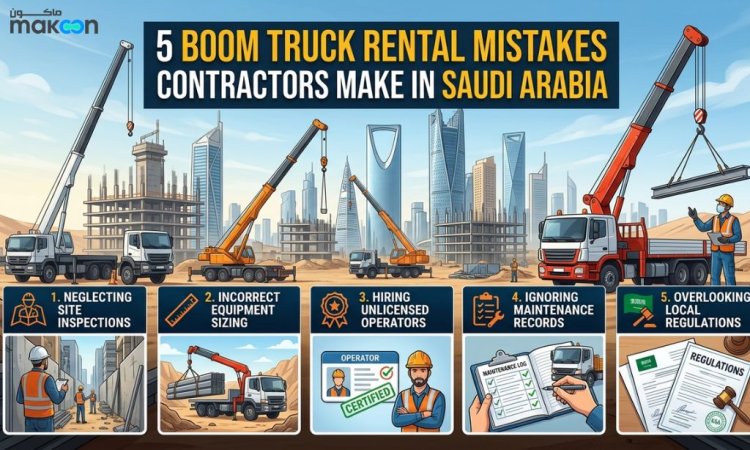
Boom truck rental in Saudi Arabia looks simple on the surface: call a supplier, get a truck, start lifting. Most of the costly mistakes contractors make happen before the truck ever arrives, when the wrong capacity, the wrong certification, or a site nobody walked gets locked in at the booking stage. This guide covers the five mistakes that come up most often, what they actually cost a project, and the questions worth asking before you sign a rental agreement.
What Is a Boom Truck?
A boom truck, also called a truck-mounted crane, is a self-propelled lifting vehicle that combines a truck body with a hydraulically operated crane arm. Unlike a mobile crane, which typically needs separate transport and setup time, a boom truck drives directly to the lift location under its own power and can begin work almost immediately. This speed of deployment is exactly why boom trucks get specified so often for single-day and short-duration lifts across Saudi Arabia's construction and industrial sites.
|
Truck Type |
Lifting Capacity |
Max Reach |
Best Use |
|
Medium-duty |
5 to 15 tonnes |
Up to 20 m |
General construction, material handling |
|
Heavy-duty |
15 to 50+ tonnes |
Up to 40 m |
Industrial, oil and gas, large project lifts |
|
Knuckle boom |
3 to 20 tonnes |
Up to 25 m |
Precision placement, confined sites |
|
Mini boom |
1 to 5 tonnes |
Up to 10 m |
Urban, indoor, tight-access sites |
Why Contractors Rent Instead of Buying
A boom truck sits idle for long stretches between lift-heavy phases of a project, and maintaining the hydraulic boom system, chassis and certification records adds up quickly for an owner running one unit on a single project at a time. Renting lets a contractor match the truck type, capacity and reach to each specific lift, a medium-duty unit for a general site, a heavy-duty unit for a plant shutdown, without carrying an asset that spends most of the year parked.
Mistake #1: Choosing Equipment Based Only on Rental Price
A medium-duty boom truck at a lower day rate looks like the obvious choice next to a heavy-duty unit costing more, until the cheaper truck cannot reach the required height or lift the actual load. The real cost of the wrong truck is not the day-rate difference. It is the second mobilisation, the lost day on site, or worse, an operator attempting a lift the machine was never rated for.
Mistake #2: Ignoring Lift Capacity and Working Height
Capacity and reach are not independent numbers: a truck rated for 15 tonnes close to the chassis may lift only a fraction of that at its maximum boom extension. Medium-duty trucks lift 5 to 15 tonnes to about 20 metres, while heavy-duty units handle 15 tonnes upward to 50 or more, reaching up to 40 metres. Specifying tonnage alone, without the actual lift radius and height, is how contractors end up with a truck that cannot complete the job it was booked for.
Mistake #3: Renting Without Checking Safety Certifications
On Aramco, SABIC or Jubail Industrial City sites, an operator without current site-entry certification gets turned away at the gate regardless of how experienced they are on paper. Confirming operator certification status before the truck is dispatched, not after it arrives, is what keeps a scheduled lift from becoming a lost day.
Mistake #4: Not Planning Site Access Before Delivery
A boom truck needs firm, level ground for its outriggers and enough swing radius clear of overhead lines, scaffolding or parked vehicles. Contractors who confirm load weight and site location but never walk the actual access route often discover the problem only once the truck is already on site and cannot position itself for the lift.
Mistake #5: Choosing a Rental Company Without Technical Support
A supplier that simply asks what size truck you want and dispatches whatever is available leaves the contractor to catch any mismatch themselves. A rental company worth using asks for load weight, required reach, site location and duration before quoting a price, since site conditions, not a generic truck category, determine which unit actually works.
How to Choose the Right Boom Truck Rental Company in Saudi Arabia
Look for four things before signing anything: certified operators included as standard rather than an optional extra, a maintained fleet with current TUV and Aramco documentation, coverage across the specific region your project sits in, and a response process that asks about your load and site before quoting a price. Any boom truck rental company that confirms these details upfront, like Makcon's own fleet page sets out, is telling you it has done this before.
Industries That Frequently Use Boom Trucks
|
Industry |
Typical Application |
Recommended Boom Type |
|
Oil and gas |
Pipe and equipment lifts at refineries, petrochemical plants |
Heavy-duty |
|
Construction |
Steel, precast and material placement on active sites |
Medium or heavy-duty |
|
Power and utilities |
Transformer and cable drum handling, pole erection |
Medium-duty |
|
Industrial maintenance |
Factory equipment overhaul, machinery installation |
Knuckle boom |
|
Telecommunications |
Tower erection, antenna installation, cable pulling |
Knuckle or medium boom |
|
Logistics and warehousing |
Loading and unloading heavy cargo, container handling |
Medium or mini boom |
Questions to Ask Before Renting a Boom Truck
1. What is the exact load weight and required lift radius, not just an estimated truck size?
2. Is a certified operator included, and can the company confirm current site-entry certification for this specific site?
3. What is the truck's maximum reach at the radius your lift actually needs, not just its rated tonnage?
4. Can the site accommodate the truck's outrigger footprint and swing radius?
5. What happens if the truck or operator is unavailable on the confirmed date?
6. Is pricing itemised, and does it include the operator, or is that billed separately?
Why Makcon Is the Right Rental Partner
Makcon supplies boom truck rental services across 18 cities and industrial zones in Saudi Arabia, full fleet and coverage details here, from Al Khobar and Jubail in the Eastern Province to Riyadh's central corridor and Yanbu on the western coast. Every rental includes a certified operator as standard, and the fleet covers medium-duty, heavy-duty, knuckle boom and mini boom configurations, so the truck is matched to the actual lift rather than whatever happens to be free. Quotes are itemised and typically returned within 60 minutes of enquiry, standard rentals dispatch within 24 to 48 hours, and billing is compliant with ZATCA e-invoicing requirements for corporate and government clients.
Conclusion
Most boom truck rental mistakes happen at the booking stage, not on site: the wrong capacity for the actual reach, an operator without the right certification, a site nobody walked before delivery day. None of these are complicated to avoid. They just require asking about load, reach, site access and documentation before the truck is booked, not after it arrives. As covered in our broader look at why Makcon is a trusted partner for heavy equipment rental, search "boom truck hire Saudi Arabia" and you will find plenty of suppliers, but the one worth calling back is usually the one that asked these questions the first time.
Need a Boom Truck Matched to Your Actual Lift?
Share your load weight, required reach, site location and rental duration, and Makcon will confirm the right truck and a written quote within 60 minutes. Call +966 56 849 1941, email sales@mak-con.com, or request a quote.
Frequently Asked Questions
Is renting a boom truck cheaper than buying?
For most contractors, yes, since a boom truck spends long stretches idle between lift-heavy phases, and renting avoids the maintenance, certification and depreciation costs of owning a unit used on one project at a time. Buying only makes sense for a contractor running continuous, similar lifts for years.
How do I choose the right boom truck?
Match the truck to the actual load weight and required lift radius, not just an estimated size. Medium-duty trucks (5 to 15 tonnes, up to 20 metres) suit general construction, while heavy-duty units (15 to 50+ tonnes, up to 40 metres) suit industrial and plant-scale lifts. Confirm the specific reach needed for your job before booking.
Do boom trucks require certified operators?
Yes. Every Makcon boom truck rental includes a certified, experienced operator trained in Saudi Arabia's worksite safety standards. For Aramco or SABIC site entry, confirm current site-specific operator certification before the truck is dispatched.
What industries use boom trucks?
Oil and gas, construction, power and utilities, industrial maintenance, telecommunications, infrastructure and roads, logistics and warehousing, and marine and port operations all use boom trucks regularly, typically matched to a specific truck type for each application.
How much does boom truck rental cost in Saudi Arabia?
Daily rates typically start from SAR 800 to SAR 1,500 for medium-duty trucks and SAR 2,000 or more for heavy-duty units, depending on truck type, capacity, rental duration and site location. Contact Makcon for a free, itemised quotation specific to your project.
Can I rent a boom truck for a short-term project?
Yes. Makcon's minimum rental period is one working day, with no multi-day commitment required. Weekly and monthly packages are available for longer projects, typically at a more favourable day rate.
What documents should I check before renting?
Confirm the rental company's Commercial Registration details, the operator's certification status, and get an itemised written quotation before booking. For your own documentation, have your company's Commercial Registration (CR) number, site location, scope of work and site supervisor contact ready to share.
Which cities does Makcon serve in Saudi Arabia?
Makcon provides boom truck rental across 18 cities and industrial zones, including Al Khobar, Dammam, Jubail and Dhahran in the Eastern Province, Riyadh and Qassim in the Central Region, and Jeddah, Yanbu and Madinah in the Western Region.
Written by L K Monu Borkala
L K Monu Borkala is the Founder and Director of OneCity Technologies Pvt Ltd, with over two decades of experience in B2B industrial and heavy equipment content for the Saudi Arabia and Gulf markets, having delivered SEO campaigns for equipment rental providers, construction firms, and logistics operators across the Kingdom. Author profile
What's Your Reaction?