Benefits of Renting Cranes in Saudi Arabia
Renting cranes and heavy equipment in Saudi Arabia cuts costs, reduces compliance burden, and keeps Vision 2030 projects on schedule. Full breakdown inside
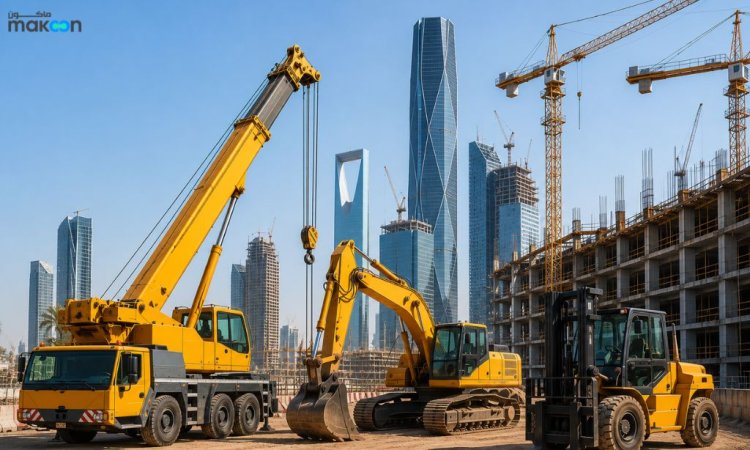
Saudi Arabia's construction equipment rental market is valued at USD 1.3 billion in 2025, growing at 6.34 per cent annually toward a projected USD 2.3 billion by 2034. Behind this growth lies a fundamental shift in how contractors approach heavy equipment — away from capital-intensive ownership and toward rental models that deliver flexibility, compliance, and financial efficiency. With USD 196 billion in construction contracts awarded in 2025 alone and an unawarded project pipeline of USD 1.5 trillion, the Kingdom's equipment demand has never been higher, and the strategic case for renting cranes and heavy equipment has never been stronger.
This guide examines the twelve core benefits that drive Saudi contractors toward equipment rental, covers the crane and equipment types available, explains how rental simplifies Aramco and SABIC compliance, and provides practical guidance for selecting a rental partner capable of supporting projects from single-crane assignments to multi-year mega-project deployments.
12 Strategic Benefits of Renting Cranes and Heavy Equipment
1. Eliminate Capital Expenditure and Protect Cash Flow
A single 50-tonne mobile crane costs SAR 1.2–1.8 million to purchase. A fleet of excavators, bulldozers, generators, and access equipment for a medium-sized construction site can lock up SAR 3–8 million of working capital before a single foundation is poured. Rental converts this capital expenditure into a predictable monthly operating expense. For contractors competing for Vision 2030 mega-projects that require performance bonds of 5–10 per cent of contract value, every riyal of preserved capital improves bonding capacity and competitiveness.
2. Access the Right Crane for Every Lift
Different project phases demand different crane types. Foundation work may require a crawler crane for heavy pile driving. Structural steel erection needs a tower crane with reach and height. Module installation demands a high-capacity mobile crane. Maintenance shutdowns call for a boom truck for quick positioning in tight spaces. Purchasing a crane for each task is financially impractical — most contractors would need four to six different crane types to cover their full range of lifting requirements. Rental gives access to the exact crane type and capacity needed for each phase, then swaps it for the next.
3. Transfer the Full Maintenance Burden
Maintaining heavy equipment in Saudi Arabia's climate costs 5–10 per cent of the equipment's purchase price annually. At 50 °C ambient temperatures with regular sandstorm exposure, hydraulic seals degrade faster, engine cooling systems work harder, air filtration requires more frequent replacement, and electrical components face accelerated wear. When you rent, the entire maintenance burden — preventive servicing, reactive repairs, component replacement, and the workshop infrastructure needed to support it — transfers to the rental company. Their maintenance cost is spread across a fleet of hundreds of units; your cost for owned equipment is concentrated on each individual machine.
4. Deploy Certified Equipment Without the Certification Process
Every piece of equipment entering an Aramco-controlled facility must carry current TUV certification, documented load-test results, fire-suppression systems, and external emergency-stop circuits. SABIC and the Royal Commission for Jubail and Yanbu impose equivalent standards. Obtaining and maintaining these certifications on owned equipment costs SAR 15,000–25,000 per unit per year and requires scheduling inspections, withdrawing equipment from service, and managing documentation. An Aramco-approved rental provider maintains all certifications as a core business function — the equipment arrives on site pre-certified, and the documentation is ready for inspection at the gate.
5. Scale Equipment Up or Down Within Days
Construction projects do not follow linear resource curves. A road project may begin with 2 excavators and 3 dump trucks for earthworks, peak at 8 excavators and 12 dump trucks during bulk excavation, then drop back to 2 excavators for finishing works. Owning equipment sized for peak demand means carrying idle assets during off-peak phases — each one depreciating, insured, and stored at your expense. Rental allows you to scale from 2 units to 12 and back to 2 with a single variation order, paying only for the equipment you are actually using.
6. Eliminate Operator Recruitment and Certification Complexity
Wet-hire rental — where the provider supplies both equipment and a certified operator — solves one of the most persistent challenges in Saudi construction: finding and retaining qualified operators. TUV-certified crane operators, Aramco-badged equipment drivers, and AWS-qualified welders are in high demand across the Kingdom. Recruiting, sponsoring visas, maintaining Iqama status, providing medical insurance, and meeting Saudisation (Nitaqat) quotas for each operator adds SAR 8,000–15,000 per month in overhead beyond the operator's salary. Wet hire from an integrated provider packages the operator cost into the rental rate and transfers all employment compliance to the rental company.
7. Reduce Downtime with Guaranteed Response Times
When owned equipment breaks down on a remote site, the owner bears the full cost of diagnosis, parts procurement, technician travel, and repair time. A hydraulic pump failure on a crawler crane can take 3–7 days to resolve if parts are not in stock locally. Professional rental companies maintain mobile service fleets, regional spare-parts inventories, and 24/7 technical support lines. Guaranteed response times — typically 4–12 hours depending on location — mean that equipment downtime is measured in hours rather than days, and the cost of the response is included in the rental agreement rather than charged as an emergency expense.
8. Access Latest-Generation Equipment and Technology
Rental fleets are continuously refreshed, with average fleet age typically 3–5 years. This means access to the latest engine technology (Tier 4 Final emission standards, electronic fuel injection, common-rail diesel systems), advanced safety features (rated capacity limiters on cranes, anti-two-block systems, load-moment indicators), and fleet management technology (GPS tracking, telematics, remote diagnostics). A 10-year-old owned crane lacks these features and consumes 15–25 per cent more fuel than a current model — a significant operating cost difference on a machine burning 30–80 litres per hour.
9. Eliminate Storage and Yard Costs Between Projects
Between projects, owned equipment must be stored in a secure yard. In the Eastern Province, Riyadh, or Jeddah, yard space costs SAR 5,000–15,000 per unit per month depending on equipment size and security requirements. A contractor with 15 owned machines sitting idle between a completed project and a pending mobilisation faces SAR 75,000–225,000 per month in yard costs alone — plus insurance, security, and periodic maintenance to prevent deterioration. Rented equipment returns to the provider's depot when the project ends. Storage is their cost, not yours.
10. Avoid Depreciation Risk Entirely
Heavy equipment depreciates 20–30 per cent in its first year and retains only 40–60 per cent of value after five years. Market fluctuations, new model releases, emission regulation changes, and oversupply in the used-equipment market can erode resale values further. When you rent, depreciation is the rental company's problem. Your financial exposure begins on the day the equipment arrives on site and ends on the day it leaves — no residual value risk, no resale negotiation, no write-down on your balance sheet.
11. Simplify Insurance and Liability Management
Owning heavy equipment requires comprehensive insurance covering damage, theft, third-party liability, and transport. For a fleet of 10 machines worth SAR 5 million, annual insurance premiums run SAR 50,000–150,000. Claims management, excess payments, and policy renewals add administrative overhead. With rental, the rental company carries the primary insurance on the equipment. The contractor's liability is typically limited to negligent damage and a defined excess — a significantly simpler and less expensive insurance position.
12. Focus Your Organisation on Core Competencies
Every hour your project manager spends managing equipment maintenance, certification renewals, operator recruitment, and fleet logistics is an hour not spent on construction management, client relationships, safety leadership, and project delivery. Equipment management is a specialised discipline that requires workshop infrastructure, technician teams, parts procurement systems, and fleet management software. Outsourcing this function to a professional rental provider lets your organisation focus on what it does best — building projects — while the equipment partner focuses on what they do best — keeping machines running.
Crane Types Available for Rental in Saudi Arabia
The following table summarises the primary crane types available through professional rental providers in Saudi Arabia, their capacity ranges, and the construction and industrial applications each type serves:
| Crane Type | Capacity Range | Best For | Saudi Applications |
|---|---|---|---|
| Mobile Crane (Hydraulic) | 25 T – 200 T | General lifting, versatile positioning | Building construction, precast erection, infrastructure |
| Crawler Crane | 50 T – 500 T | Heavy lifts on soft or uneven ground | Pipeline, power plant module lifts, piling |
| Rough Terrain Crane | 20 T – 100 T | Off-road sites without prepared hardstand | Desert sites, greenfield developments, NEOM |
| All-Terrain Crane | 40 T – 300 T | Road travel + off-road capability | Multi-site projects, highway construction |
| Tower Crane | 6 T – 20 T (tip load) | High-rise construction, fixed position | Riyadh towers, Jeddah Central, hotel developments |
| Boom Truck | 10 T – 80 T | Quick setup, road-mobile, tight spaces | Maintenance, telecom, power line, quick lifts |
| Spider Crane | 3 T – 10 T | Indoor lifts, confined spaces, glass installation | Mall fit-outs, mosque renovations, interior works |
Heavy Equipment Categories Commonly Rented
Beyond cranes, Saudi construction projects require a comprehensive range of heavy equipment across multiple categories:
| Category | Equipment Types | Common Saudi Project Use |
|---|---|---|
| Earthmoving | Excavators, Bulldozers, Wheel Loaders, Graders | Site preparation, foundation excavation, road construction |
| Material Handling | Forklifts, Telehandlers, Dump Trucks | Warehouse logistics, bulk material transport, loading |
| Access Equipment | Boom Lifts, Scissor Lifts, Manlifts | Facade work, MEP installation, inspection at height |
| Power Generation | Diesel Generators (25–2,000 kVA) | Construction site power, shutdown support, events |
| Compaction | Roller Compactors, Vibratory Plates | Road base, embankment, utility trench backfill |
| Specialised | Welding Machines, Backhoe Loaders | Pipeline welding, utility trenching, mixed earthworks |
Industries That Benefit Most from Equipment Rental in Saudi Arabia
Oil, Gas, and Petrochemical
Saudi Aramco's upstream and downstream operations drive the largest share of equipment rental demand in the Kingdom. Drilling campaigns, pipeline construction, refinery turnarounds, and petrochemical plant shutdowns all require temporary heavy equipment — cranes for module lifts, generators for shutdown power, access equipment for work at height on process columns and pipe racks. Aramco signed 55 strategic agreements in 2022 alone, each generating construction activity that peaks and recedes on project-specific timelines perfectly suited to the rental model.
Vision 2030 Giga-Projects
NEOM (USD 24 billion in contracts), Qiddiya (USD 55 billion), Diriyah Gate (USD 63.2 billion), and the Red Sea Project (USD 28.8 billion) are constructing entire cities and entertainment districts from raw desert. With 140,000+ construction workers at NEOM alone, equipment demand at these sites is massive but finite — when the construction phase ends, the cranes, generators, and earthmoving equipment must move to the next mega-project. Rental is the only model that matches the equipment lifecycle to the project lifecycle.
Power and Water Infrastructure
Saudi Arabia's power demand is growing as Riyadh targets 10.1 million residents by 2030. New power plants, transmission lines, substations, and desalination facilities require heavy lifting capacity for turbine and transformer installation, temporary power for construction phases, and access equipment for work on towers and structures. These projects are multi-year but still finite, making rental the default for most equipment categories.
Roads, Bridges, and Transportation
The USD 23 billion Riyadh Metro, the USD 7 billion Saudi Landbridge Railway, highway expansions, and bridge construction are linear projects that move across geography — equipment needs shift location every few months as the work front advances. Rental provides the flexibility to deploy equipment at the active work front and demobilise from completed sections without transporting owned equipment across hundreds of kilometres.
Commercial and Residential Development
With over 340,000 new homes needed in Riyadh and 3,800 construction licences issued in 2024, Saudi Arabia's residential and commercial construction sector is expanding rapidly. Medium-sized contractors entering this market cannot afford to purchase equipment fleets before their first project revenues arrive. Rental gives new and growing contractors access to the same quality of equipment as established firms, enabling them to compete for and deliver projects without upfront capital barriers.
Events and Entertainment
The Kingdom hosted over 100 international sporting events in 2024, with the AFC Asian Cup 2027, Asian Winter Games 2029, and FIFA World Cup 2034 on the horizon. Event infrastructure — temporary grandstands, broadcast towers, floodlighting, hospitality structures — requires cranes for erection, generators for power, and access equipment for installation, all deployed and removed within tight event windows that ownership cannot accommodate.
How Rental Simplifies Aramco, SABIC, and Royal Commission Compliance
Working on oil-and-gas, petrochemical, and industrial sites in Saudi Arabia means navigating the most demanding equipment certification requirements in the construction industry. The compliance advantage of rental is one of the most underappreciated benefits, especially for contractors new to the Saudi market:
- TUV certification: Every crane, generator, and piece of access equipment must hold current TUV certification before entering an Aramco or SABIC facility. Rental providers maintain rolling certification schedules across their fleet, ensuring every unit is always current.
- Load-bank testing: Generators require documented load-bank test results demonstrating rated output under load. Rental companies conduct these tests as standard before every deployment.
- Operator certification: Crane operators, forklift drivers, and equipment operators must hold TUV-issued category-specific licences and Aramco safety-pass badges. Rental companies employing their own operators maintain all certifications.
- Third-party inspection (TPI): Equipment undergoes periodic TPI by approved inspection bodies. Rental companies schedule and manage these inspections as part of their fleet management operations.
- Documentation audit trail: Every Aramco site audit requires immediate access to maintenance logs, certification documents, inspection reports, and operator qualifications. Rental companies maintain digital documentation systems that produce these records on demand.
For a contractor entering the Saudi market for the first time — whether from within the GCC or internationally — the certification process for owned equipment can delay project start by 3–6 months. Renting from an established Aramco-approved provider eliminates this delay entirely and provides the documentation infrastructure that new market entrants have not yet built.
Selecting the Right Equipment Rental Partner
Not all rental companies deliver the same capability. Evaluate potential partners against these eight criteria to ensure they can support your project requirements:
- Fleet breadth: Can the provider supply cranes, earthmoving, power generation, access equipment, and material handling from a single fleet?
- Fleet depth: Does the provider have enough units of each type to handle your peak requirements without subcontracting to third parties?
- Aramco, SABIC, and Royal Commission certification: Is the fleet pre-certified, and can the provider produce documentation on demand?
- Wet-hire capability: Can the provider supply certified operators alongside the equipment?
- Regional presence: Does the provider operate from bases in the Eastern Province, Riyadh, and Jeddah?
- Maintenance response time: What is the guaranteed breakdown response — 4, 8, or 12 hours — and is 24/7 support available?
- Contract flexibility: Can you scale equipment up or down with short notice, extend or shorten rental periods, and swap equipment types mid-project?
- Integrated services: Does the provider also offer industrial support, material supply, and project coordination — or just equipment?
Why Saudi Contractors Choose Makcon for Crane and Equipment Rental
Makcon provides Aramco-approved, TUV-certified crane and heavy equipment rental across Saudi Arabia, with a fleet covering cranes (10 T – 500 T), earthmoving, power generation (25 kVA – 2,000 kVA), material handling, access equipment, and specialised units. With over 650 projects supported across oil and gas, construction, petrochemical, power, and infrastructure sectors, Makcon delivers:
- Pre-certified equipment meeting Aramco SAES, SABIC, TUV, and Royal Commission standards
- Wet-hire packages with TUV-certified operators and Aramco-badged personnel
- 24/7 maintenance support with regional mobile service teams
- Mobilisation within 24–48 hours from Eastern Province, Riyadh, and Western Region bases
- Integrated manpower supply, material procurement, and industrial support services under a single contract
Contact Makcon for a rental proposal matched to your project's crane requirements, equipment needs, timeline, and certification requirements.
Frequently Asked Questions
How much does it cost to rent a crane in Saudi Arabia?
Crane rental costs in Saudi Arabia depend on crane type, capacity, rental duration, and whether an operator is included (wet hire). As general benchmarks: a 25-tonne mobile crane rents for approximately SAR 1,200–1,800 per day; a 50-tonne mobile crane for SAR 2,000–3,500 per day; a 100-tonne crane for SAR 3,500–5,500 per day; and a tower crane for SAR 35,000–55,000 per month on a long-term basis. Monthly rates offer significant discounts over daily rates for projects lasting 3+ months.
What types of cranes can I rent for construction in Saudi Arabia?
Professional rental providers in Saudi Arabia offer mobile hydraulic cranes (25–200 T), crawler cranes (50–500 T), rough terrain cranes (20–100 T), all-terrain cranes (40–300 T), tower cranes (6–20 T tip load), boom trucks (10–80 T), and spider cranes (3–10 T). The right crane type depends on lifting capacity required, site ground conditions, setup space, and project duration.
Do I need Aramco certification for rented equipment?
Yes — all equipment entering Aramco or SABIC facilities must carry current TUV certification regardless of ownership. However, when you rent from an Aramco-approved provider like Makcon, the certification is included as standard. The rental company maintains all documentation, schedules inspections, and ensures every unit is compliant before deployment. This eliminates the 3–6 month certification process that new equipment owners face.
What is the difference between wet hire and dry hire?
Dry hire provides the equipment only — you supply the operator. Wet hire includes both the equipment and a certified operator as a bundled package. For Aramco, SABIC, and Royal Commission projects, wet hire is often the preferred option because the operator must hold TUV certification and an Aramco safety badge. Wet hire typically costs 15–25 per cent more than dry hire but eliminates operator recruitment, certification, visa, and Saudisation compliance.
Can I rent heavy equipment for short-term projects in Saudi Arabia?
Yes. Professional rental companies offer daily, weekly, and monthly rental terms. Short-term rental (daily or weekly) is common for specific project phases — a boom truck for a two-day steel erection, a generator for a weekend event, or additional excavators for a one-week bulk excavation push. Short-term rates are higher per day than monthly rates, but the total cost is lower than committing to a full-month rental for a few days of work.
How quickly can rented equipment be delivered to a Saudi project site?
Established rental providers can mobilise standard equipment within 24–48 hours for projects within the Eastern Province, Riyadh, and Jeddah corridors. Remote sites or large/specialised equipment (crawler cranes, tower cranes) may require 3–7 days for transport and assembly. Emergency mobilisation for shutdown support can often be arranged within 12–24 hours from regional depots.
Is renting heavy equipment better than buying for Vision 2030 projects?
For most Vision 2030 contractors, yes. These projects have defined construction phases with clear start and end dates, making rental's pay-for-what-you-use model significantly more cost-effective than purchasing equipment that will be idle once the construction phase ends. The scale of Vision 2030 projects also means equipment requirements change rapidly as project phases evolve — rental provides the flexibility to match equipment to demand without capital commitment.
What other equipment can I rent besides cranes?
A comprehensive rental provider offers earthmoving equipment (excavators, bulldozers, wheel loaders, graders), material handling (forklifts, telehandlers, dump trucks), access equipment (boom lifts, scissor lifts, manlifts), power generation (diesel generators 25–2,000 kVA), compaction (roller compactors, plate compactors), and specialised equipment (welding machines, backhoe loaders). The most effective approach is sourcing all categories from a single integrated provider to eliminate multi-vendor coordination overhead.
What's Your Reaction?