Trusted Crane Rental Company in Saudi Arabia
Discover why Makcon is a trusted crane rental company in Saudi Arabia for major projects. Explore fleet types, safety standards, and reliable crane rental services.
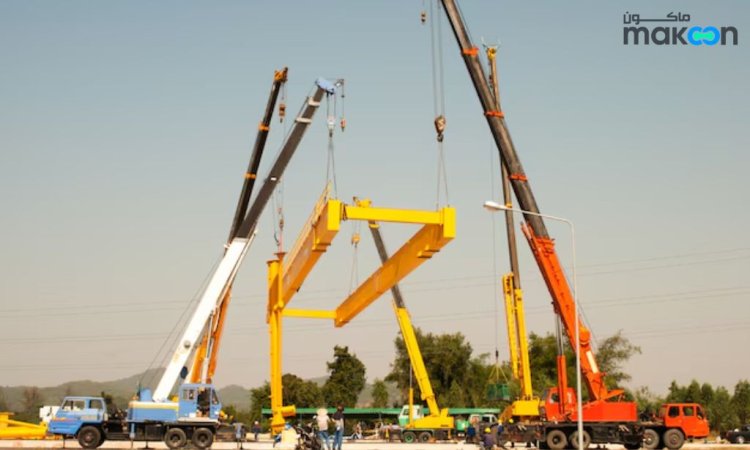
Large-scale construction, oil and gas expansion, and industrial maintenance projects across Saudi Arabia depend on reliable crane access. When a crane fails to arrive on schedule, or arrives without valid certification, the cost is not limited to rental fees. Project timelines slip, safety incidents become more likely, and contractors risk removal from approved vendor lists on regulated sites such as Aramco and SABIC facilities.
This is why choosing a crane rental partner is not a procurement decision alone. It is a project risk decision. A trusted crane rental company brings certified equipment, qualified operators, documented safety processes, and the mobilisation speed to keep your project moving. In a market projected to grow from USD 497 million in 2024 to over USD 860 million by 2033, the number of rental providers is increasing, but the gap between reliable partners and unreliable ones is widening at the same pace.
This article explains what makes a crane rental company trustworthy in the Saudi market, covers the crane types and specifications contractors should know, and details how Makcon meets these standards across construction, oil and gas, petrochemical, and industrial projects.
Why Crane Rental Demand Is Growing in Saudi Arabia
Saudi Arabia is executing the largest infrastructure programme in the Middle East under Vision 2030. Active and planned mega-projects include NEOM's The Line, New Murabba in Riyadh, Jeddah Central, Diriyah Gate, the Riyadh Metro expansion, King Salman International Airport, and dozens of industrial zone expansions in Jubail, Yanbu, and Ras Al Khair. Each of these projects requires hundreds of crane deployments across different phases of construction.
Beyond mega-projects, the day-to-day demand for cranes comes from oil refinery turnarounds, petrochemical plant shutdowns, power plant maintenance, pipeline construction, commercial building projects, and warehouse development across the Kingdom's three main economic regions.
This sustained demand has made the Saudi crane rental market one of the fastest-growing segments within the broader construction equipment rental industry, which is valued at over USD 2 billion. For contractors, the practical result is clear: the right rental partner can mobilise quickly because they operate dedicated fleets within the Kingdom, while a less established provider may struggle with availability during peak project seasons.
Types of Cranes Used in Saudi Arabia Projects
Choosing the correct crane type for a project depends on the load weight, lift radius, ground conditions, site access, and height requirements. Saudi Arabia's terrain and climate conditions, including high temperatures, sandy ground, and remote industrial locations, make crane selection especially important. Below is a breakdown of the crane types available for rental and their typical applications.
Mobile Cranes
Mobile cranes are the most commonly rented crane type in Saudi Arabia. Mounted on wheeled carriers, they can travel on public roads and move between job sites without requiring a low-loader trailer. Capacity ranges from 25 tonnes for light commercial lifts up to 200 tonnes for heavy structural work. Mobile cranes are used for steel erection, precast concrete placement, equipment installation, and general construction lifting.
Crawler Cranes
Crawler cranes move on tracked undercarriages, giving them stability on soft or uneven ground without outrigger setup. Capacities range from 50 tonnes to 500 tonnes or more. They are the preferred choice for heavy industrial lifts in oil and gas facilities, refinery shutdowns, and large infrastructure projects where the crane needs to move under load. Transporting crawler cranes to site requires low-loader trailers due to their weight and track width.
All-Terrain Cranes
All-terrain cranes combine the road mobility of a mobile crane with the off-road capability of a rough terrain crane. Capacities typically range from 40 tonnes to 300 tonnes. These cranes perform well on Saudi Arabia's mixed-terrain project sites, including partially developed industrial zones where paved and unpaved surfaces alternate.
Rough Terrain Cranes
Rough terrain cranes are built specifically for unpaved, uneven, or sandy ground conditions. With four-wheel drive and four-wheel steering, they handle the off-road environments common in Saudi Arabia's oilfield and infrastructure sites. Capacity ranges from 20 tonnes to 100 tonnes. They are particularly useful in the Eastern Province, where many oil and gas sites are located on undeveloped terrain.
Tower Cranes
Tower crane rental is essential for high-rise construction and large commercial developments. Fixed to the ground or attached to the building structure, tower cranes provide lifting at heights of 40 metres to 80 metres or more, with tip load capacities from 6 tonnes to over 20 tonnes. Projects such as New Murabba and Jeddah Tower rely heavily on tower cranes for vertical construction.
Boom Trucks
Boom trucks (truck-mounted cranes) combine a crane boom with a standard truck chassis, making them fast to deploy for medium-duty lifts. Capacities range from 10 tonnes to 80 tonnes. They are frequently used for material handling, equipment positioning, sign installation, and utility work. Their road-legal design allows rapid mobilisation between multiple sites in a single day.
Spider Cranes
Spider cranes are compact, lightweight cranes designed for confined spaces, indoor work, and sites with limited access. Capacities range from 3 tonnes to 10 tonnes. Their narrow profile allows them to pass through standard doorways and operate on floor surfaces that cannot support heavier equipment. In Saudi Arabia, spider cranes are used in shopping mall construction, factory interior work, and plant maintenance where overhead cranes are unavailable.
Crane Specifications Comparison
| Crane Type | Capacity Range | Best Suited For | Mobility |
|---|---|---|---|
| Mobile Crane | 25T – 200T | General construction, steel erection | Road-legal, self-propelled |
| Crawler Crane | 50T – 500T | Heavy industrial lifts, refinery shutdowns | Tracked, requires low-loader transport |
| All-Terrain Crane | 40T – 300T | Mixed-terrain industrial zones | Road-legal with off-road capability |
| Rough Terrain Crane | 20T – 100T | Oilfields, unpaved sites, sandy ground | Off-road only, 4WD/4WS |
| Tower Crane | 6T – 20T tip load | High-rise construction, vertical builds | Fixed installation on site |
| Boom Truck | 10T – 80T | Material handling, utility, quick lifts | Road-legal truck chassis |
| Spider Crane | 3T – 10T | Indoor work, confined spaces, malls | Compact, fits through doorways |
How to Select the Right Crane for Your Project
Selecting the wrong crane for a job leads to remobilisation costs, project delays, and potential safety incidents. Contractors should evaluate five factors before confirming a crane rental:
1. Load Weight and Lift Radius. The crane's rated capacity decreases as the boom extends further from the centre. A 100-tonne crane does not lift 100 tonnes at full boom extension. Always specify the maximum load weight and the required lift radius so the rental company can recommend the correct crane size with adequate margin.
2. Ground Conditions and Site Access. Sandy or unpaved surfaces require rough terrain cranes or crawler cranes. Paved urban sites can use mobile cranes. Confined spaces with narrow access points may require a spider crane. The site survey should identify ground bearing capacity, overhead obstructions, and approach road width.
3. Lift Height and Obstruction Clearance. High-rise construction and deep plant interiors both require careful height planning. Tower cranes serve vertical builds. Boom trucks and mobile cranes serve lower-height lifts with longer reach requirements.
4. Project Duration. Short-term rentals of a few days suit one-off lifts and shutdowns. Long-term rentals of several months are more cost-effective for ongoing construction phases. Some crane rental companies offer project-based contracts that cover multiple crane types and redeployments under a single agreement.
5. Critical vs Non-Critical Lifts. On Aramco, SABIC, and Royal Commission sites, lifts above a defined tonnage threshold are classified as critical lifts. These require a third-party inspection (TPI) approved lift plan, certified rigging equipment, and a designated lift supervisor. The rental company must be equipped to support this documentation and approval process.
Crane Rental vs Equipment Ownership: A Cost Comparison
Owning a crane fleet is a significant capital commitment. Beyond the purchase price, ownership costs include:
- Operator employment, certification, and ongoing training
- Scheduled maintenance, inspections, and parts replacement
- Third-party certification renewals (TUV, Aramco re-approval)
- Insurance and liability coverage
- Transport and mobilisation between sites (low-loader costs)
- Storage during idle periods between projects
- Depreciation and eventual disposal
Rental converts this capital expenditure into an operational cost that aligns with project duration. If a project requires a 100-tonne crawler crane for three months and a 50-tonne mobile crane for six weeks, the contractor pays only for the time and type needed. When the project phase changes, the crane is demobilised and replaced with the next required type. There is no idle equipment sitting on-site consuming insurance and storage costs.
For contractors working across multiple sites and project types, heavy equipment rental through a single provider simplifies procurement, standardises safety documentation, and reduces the administrative burden of managing multiple vendor relationships.
What Makes a Crane Rental Company Trustworthy
In Saudi Arabia's regulated construction and industrial environment, trust is not a marketing claim. It is a measurable combination of certifications, capabilities, and operational track record. Contractors should evaluate a crane rental company against these criteria:
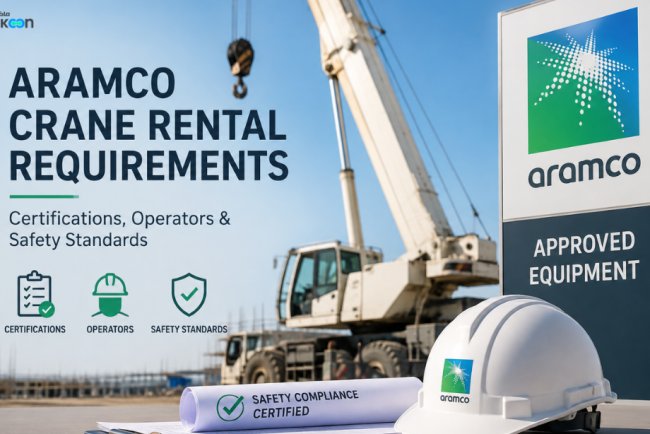
Fleet Certification. Every crane should carry valid third-party inspection certificates. For Aramco and SABIC sites, the crane and its rigging equipment must be listed on the operator's Aramco Approved Vendor List (AVL). TUV or equivalent third-party certification is the industry standard. A trustworthy company provides these certificates proactively, not only when asked.
Operator Credentials. Crane operators must hold valid Saudi government operating licences. On Aramco sites, operators additionally require Aramco Contractor Qualification certificates. The rental company should verify operator credentials and provide documentation with every deployment. Companies that offer manpower supply alongside equipment rental can match the right operator to each crane type and site requirement.
Safety Record and Compliance History. Ask for the company's safety incident record and compliance history on regulated sites. A company with repeated stand-down orders or safety violations is a liability, regardless of how competitive their rental rates appear.
Fleet Availability and Range. A company with a limited fleet will struggle during peak project seasons. Look for providers that maintain multiple units of each crane type, allowing rapid replacement if a machine develops a fault during a rental period.
Mobilisation Speed. On shutdown and turnaround projects, the crane must arrive within a defined window. A reliable company pre-positions equipment at regional bases and maintains transport arrangements for rapid deployment. In the Jubail industrial zone, where shutdown schedules are fixed months in advance, mobilisation reliability is non-negotiable.
Transparent Scope and Pricing. The rental quotation should clearly state what is included: crane, operator, rigging equipment, mobilisation and demobilisation, insurance, and any additional charges. Trustworthy companies do not surprise clients with undisclosed costs after the crane is on site.
How Makcon Meets Every Trust Standard
Makcon is a crane rental company based in Saudi Arabia with a fleet, workforce, and operational structure built specifically for the Kingdom's construction and industrial environment. Here is how Makcon addresses each trust criterion:
Certified Fleet. Every crane in Makcon's rental fleet carries valid Saudi Aramco approval and TUV third-party certification. Inspection certificates, load charts, and pre-mobilisation reports are prepared and submitted before the crane leaves the yard. This documentation package is standard practice, not an optional add-on.
Qualified Operators. Makcon supplies Saudi government licensed and Aramco-certified crane operators with every rental. Operators are matched to the crane type and the specific site requirements, whether that is an Aramco Eastern Province facility, a Royal Commission zone in Jubail, or a commercial construction site in Jeddah.
Full Lifting Support. Beyond the crane and operator, Makcon provides complete lifting support services including certified rigging equipment, lift supervision, and lift plan preparation for critical lifts. This industrial support capability means contractors deal with a single provider for the entire lifting operation rather than coordinating separate equipment, manpower, and safety vendors.
Comprehensive Fleet Range. Makcon's fleet includes mobile cranes, crawler cranes, all-terrain cranes, tower cranes, rough terrain cranes, boom trucks, and spider cranes. This range allows contractors to source all crane types from one provider, maintaining consistent certification standards and operator quality across their project.
Regional Presence. Makcon operates across 18 cities and industrial zones in Saudi Arabia, including Dammam, Al Khobar, Jubail, Dhahran, Riyadh, Qassim, Jeddah, Yanbu, and Madinah. Regional presence enables rapid mobilisation and local support throughout the rental period.
Single Point of Contact. From the initial site survey and crane recommendation through mobilisation, operation, and demobilisation, Makcon assigns a single project coordinator. This structure eliminates the communication gaps that cause delays when multiple departments or subcontractors handle different stages of a rental.
Safety Standards and Compliance in Saudi Crane Operations
Crane operations in Saudi Arabia are governed by a layered framework of government regulations, client-specific standards, and international best practices. The key compliance requirements include:
Third-Party Inspection (TPI). Cranes operating on Aramco, SABIC, and Royal Commission sites must pass third-party inspections by approved inspection bodies. TPI covers structural integrity, hydraulic systems, wire ropes, sheaves, hooks, and load-limiting devices. Inspection intervals are defined by the site operator, and expired inspections result in immediate stand-down.
Lift Plan Documentation. For critical lifts, defined by the site operator based on load weight, proximity to live equipment, or lifting over occupied areas, a formal lift plan must be submitted and approved before the crane is rigged. The lift plan includes crane configuration, boom length, radius, load weight, rigging arrangement, ground preparation, wind limits, and emergency procedures.
Operator Certification. Saudi government licensing is the minimum requirement. Aramco Contractor Qualification certificates are required for any crane operator working on Aramco-operated sites. Operators must also demonstrate competency on the specific crane model being deployed, not just the crane category.
Rigging Equipment Certification. Slings, shackles, spreader beams, and other rigging components must carry current inspection certificates and be colour-coded according to the site's inspection cycle. Using uncertified or expired rigging equipment is a category-one safety violation on most regulated sites.
Insurance Coverage. Comprehensive insurance covering third-party liability, equipment damage, and worker compensation is a standard requirement. The insurance certificate should be site-specific and cover the full rental period including mobilisation and demobilisation.
Industries That Rely on Crane Rental in Saudi Arabia
Crane rental demand in Saudi Arabia comes from multiple sectors, each with distinct operational requirements:
Construction. Residential towers, commercial complexes, shopping malls, hospitals, and educational facilities all require cranes for structural steel erection, precast concrete placement, and heavy material lifting. The construction sector is the largest consumer of crane rental services in the Kingdom.
Oil and Gas. Upstream drilling operations, downstream refinery maintenance, and petrochemical plant construction require crawler cranes and mobile cranes for heavy vessel lifts, pipe rack installation, and equipment replacement during scheduled shutdowns.
Power Generation. Power plant construction and turbine maintenance require precision lifting with specific crane configurations. Generator installation and transformer placement are common crane rental applications in the power sector.
Infrastructure. Bridge construction, railway development, airport expansion, and road infrastructure projects use crane fleets for girder placement, segment lifting, and heavy structural assembly.
Industrial Maintenance. Scheduled shutdowns and turnarounds at refineries, desalination plants, and chemical processing facilities create concentrated demand for multiple crane types over compressed timelines. Access equipment such as boom lifts and scissor lifts often works alongside cranes during these shutdown periods.
Crane Rental Coverage Across Saudi Arabia
Makcon provides crane rental services across three main regions of Saudi Arabia:
Eastern Province. The Kingdom's industrial heartland, home to Aramco headquarters, Jubail Industrial City, Ras Al Khair, and major petrochemical complexes. Makcon serves Dammam, Al Khobar, Dhahran, Jubail, and surrounding industrial zones with dedicated fleet availability for shutdown and turnaround projects.
Central Region. Riyadh's rapid expansion under Vision 2030, including New Murabba, King Salman International Airport, and Riyadh Metro, drives steady demand for tower cranes, mobile cranes, and boom trucks. Makcon serves Riyadh and Qassim from its central region operations.
Western Region. Jeddah Central, Jeddah Tower, NEOM-related logistics, and Yanbu industrial projects create demand across the western corridor. Makcon covers Jeddah, Yanbu, and Madinah in this region.
Frequently Asked Questions
What types of cranes does Makcon offer for rental in Saudi Arabia?
Makcon's fleet includes mobile cranes, crawler cranes, all-terrain cranes, tower cranes, rough terrain cranes, boom trucks, and spider cranes. Capacities range from 3 tonnes for spider cranes up to 500 tonnes for heavy crawler cranes, covering construction, oil and gas, and industrial project requirements across the Kingdom.
Does Makcon provide crane operators with the rental?
Yes. Makcon supplies Saudi government licensed and Aramco-certified operators with every crane rental. Operators are selected based on the crane type and the specific site requirements, including Aramco Contractor Qualification certification where required.
Is Makcon's crane fleet approved for Aramco and SABIC sites?
Yes. Every crane in Makcon's fleet carries valid Aramco approval and TUV third-party certification. Pre-mobilisation inspection reports, load charts, and operator credentials are submitted as part of the standard deployment package.
What factors affect crane rental pricing in Saudi Arabia?
Crane rental rates depend on the crane type and capacity, rental duration, mobilisation distance to the project site, whether an operator is included (wet hire vs dry hire), and any site-specific requirements such as critical lift planning or additional rigging equipment. Longer rental durations and project-based contracts typically offer better rates than short-term daily rentals.
How quickly can Makcon mobilise a crane to my project site?
Mobilisation timelines depend on the crane type and project location. For standard crane types in the Eastern Province, Riyadh, and Jeddah regions, Makcon can typically mobilise within 24 to 48 hours. Specialised equipment or remote locations may require additional planning time. Contact Makcon with your site location and crane requirements for a specific mobilisation estimate.
What is the difference between wet hire and dry hire for crane rental?
Wet hire includes the crane, a certified operator, and typically basic rigging equipment. Dry hire provides the crane only, and the contractor supplies their own operator. For Aramco and SABIC sites, wet hire with a certified operator is generally required for gate clearance and site compliance purposes.
Can I rent multiple crane types for different phases of the same project?
Yes. Makcon offers project-based rental agreements that cover multiple crane types and redeployments under a single contract. This arrangement is common on construction projects that require tower cranes during the structural phase, mobile cranes for equipment installation, and boom trucks for finishing work.
Which cities does Makcon serve for crane rental in Saudi Arabia?
Makcon provides crane rental across 18 cities and industrial zones, including Dammam, Al Khobar, Dhahran, Jubail, Riyadh, Qassim, Jeddah, Yanbu, and Madinah. Coverage spans the Eastern Province, Central Region, and Western Region of Saudi Arabia. Contact Makcon for availability in your specific project location.
What's Your Reaction?